
1,000+
Businesses served
$2.4B+
Cumulative client revenue generated
650+
Projects delivered
30+
Industries served

Tools & Technologies
- GPT-4 & GPT-4-turbo
- Gemini
- Claude
- Llama
- DALL-E & Stable Diffusion
- Whisper
- Langchain & LlamaIndex
- Pinecone & Weaviate
- TensorFlow & scikit-learn
- AWS, Azure & Google Cloud

800+ REVIEWS

800+ REVIEWS

800+ REVIEWS

800+ REVIEWS

800+ REVIEWS
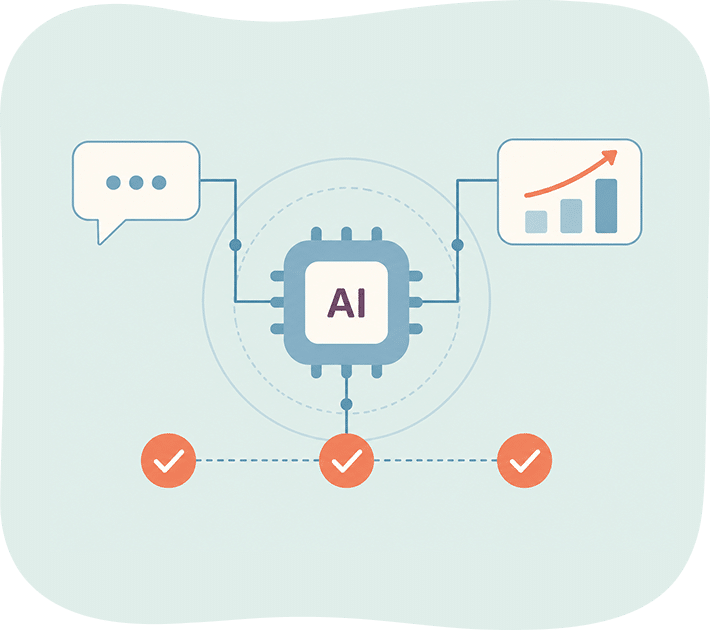
What AI Consulting and Development Actually Means
AI consulting and development is the process of identifying where artificial intelligence can remove manual work or improve decisions in your business, then designing, building, and integrating the systems that do it. That covers everything from a chatbot that qualifies leads while your team sleeps to a predictive model that tells your ad platform who is about to churn.
WebSpero has run AI and digital marketing engagements for 1,000+ businesses across 30+ industries, generating $2.4B+ in cumulative client revenue. We are not a general dev shop that added “AI” to a services list. Our AI work sits inside the same team that runs SEO, paid media, and web development for clients, so the automation we build is judged by the same standard: did it move a real business metric?
AI Has Moved from Experiment to Default Setting
Three numbers show where things actually stand right now.
78%
of organizations now use AI in at least one business function, up from 72% a year earlier.
Source: McKinsey, “The State of AI” global survey
61%
of marketers say AI represents the biggest disruption to their profession in 20 years.
Source: HubSpot, 2026 State of Marketing Report
80% / 75%
of marketers already use AI for content creation, and for media production, respectively.
Source: HubSpot, 2026 State of Marketing Report
The reality check: adoption is not the same as return. McKinsey’s own survey found more than 80% of organizations report no measurable enterprise-level profit impact from generative AI yet, and only 17% attribute 5% or more of EBIT to it. The gap between “we use AI” and “AI moved a number we care about” is exactly where a consulting partner earns its cost.
Six Ways We Put AI to Work in Your Business
From a strategy audit to a fully custom model, each service below stands on its own or connects into a larger build.
Step 1
AI Strategy & Consulting
We start with an audit of your workflows, data, and tools to find where AI creates measurable value, not just where it sounds impressive.
- Workflow and data audit
- AI opportunity mapping and ROI modeling
- Build vs. buy vs. partner roadmap
Step 02
AI Workflow Automation
Automating hand-offs between marketing, sales, and ops tools so your team stops re-entering the same data three times.
- CRM and marketing-stack automation
- Lead scoring and routing
- Reporting and dashboard automation
Step 03
AI & LLM Integration Services
Connecting GPT, Gemini, Claude, and open-source models into the software you already run, instead of replacing it.
- OpenAI, Gemini, and Claude API integration
- Internal tool and CRM embedding
- Custom knowledge-base retrieval (RAG)
Step 04
AI Chatbot & LLM Development
Custom chatbots and assistants trained on your business, not a generic script, built to qualify leads, answer support questions, or guide bookings.
- Conversational chatbot design and build
- Fine-tuning on your own knowledge base
- Multi-channel deployment (web, WhatsApp, app)
Step 05
Generative AI Development
Full generative AI products, from content and image tools to custom assistants, for teams that need more than an off-the-shelf integration.
- Custom model fine-tuning
- Content, image, and voice generation tools
- Ongoing monitoring and retraining
Step 06
Predictive Analytics & Data Modeling
Models that tell you who is about to buy, churn, or need a follow-up, so campaigns react before the moment passes instead of after.
- Churn and lead-scoring models
- Demand and revenue forecasting
- Customer segmentation and LTV prediction
AI also changes how content gets found. See how our team applies it in SEO and content strategy and Generative engine optimization for ChatGPT, Perplexity, and Google AI Mode.
Where AI Drives Results: Real scenarios, not hypotheticals


E-Commerce Personalization
Product recommendations, dynamic pricing, and on-site search that adjust to each shopper in real time instead of showing every visitor the same homepage.
E-Commerce Personalization
E-Commerce Personalization
Product recommendations, dynamic pricing, and on-site search that adjust to each shopper in real time instead of showing every visitor the same homepage.
Social & Ad Targeting
Social & Ad Targeting
AI-managed bid strategies and audience targeting across Meta, Google, and LinkedIn Ads cut wasted spend by finding the audience segments a human team would take weeks to isolate manually.
Enterprise-Scale Data Analysis
Enterprise-Scale Data Analysis
Enterprise AI platforms process customer, campaign, and transaction data at a volume no analyst team can review manually, surfacing patterns across markets and business units in one view.
AI Tools for Small Budgets
AI Tools for Small Budgets
You do not need a custom build to start. Tools like ChatGPT, Jasper, HubSpot’s AI features, and Meta Advantage+ give small teams AI-assisted content, ad optimization, and customer support without enterprise pricing. WebSpero helps small businesses choose and configure the right stack before recommending a custom build.
Where This Is Heading
Three shifts worth planning for now:

Search is becoming an answer, not a list of links
Generative engine optimization, how content is written for ChatGPT, Perplexity, and Google AI Mode is becoming as important as traditional SEO.

Agentic AI is moving from chat to action
Assistants are starting to execute multi-step tasks instead of just answering questions.

Personalization is shifting from segments to individuals
Real-time, per-shopper personalization is replacing the “audience of thousands” model.
Responsible AI at WebSpero
AI in advertising raises real questions about data privacy, bias, and transparency. We build with those in mind, not after the fact.
Client data stays inside your infrastructure or a contracted environment; we do not train external models on your proprietary data without written agreement.
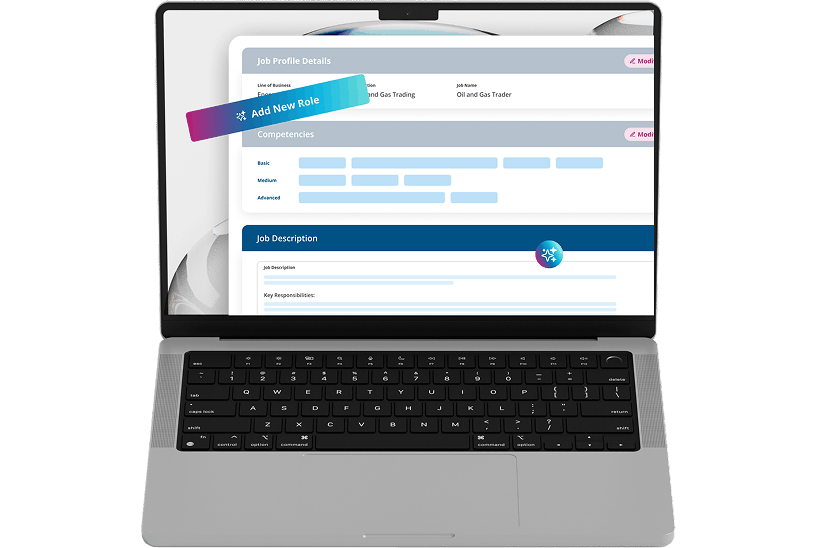
Every model we ship for decisioning (scoring, targeting, recommendations) is checked for bias before launch, the same approach used on our Konverz.ai HR-AI project.
Human review stays in the loop for anything customer-facing until accuracy is proven in production.
We are transparent with your customers about where they are interacting with AI, consistent with current ad-platform disclosure requirements.
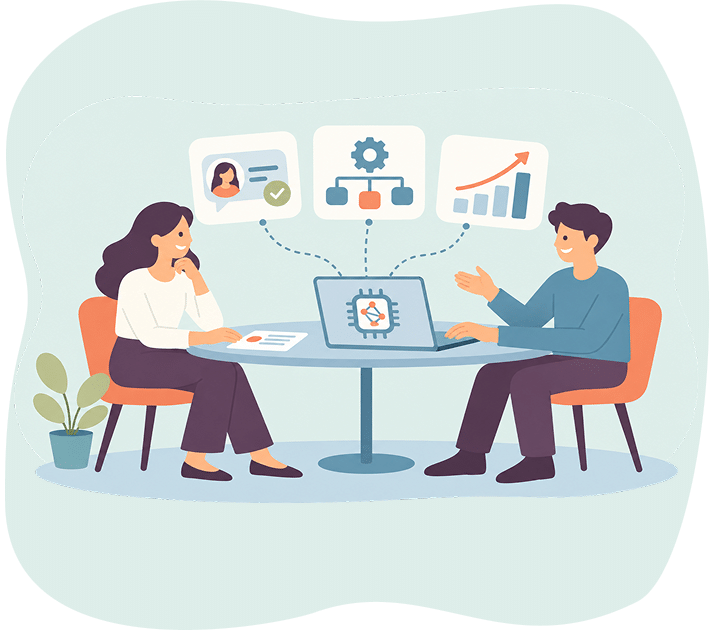
Here’s why teams pick us for AI work:
Why WebSpero

Proven at Scale
1,000+ businesses served, $2.4B+ in cumulative client revenue, 650+ projects across 30+ industries.
Certified
Google Partner and Semrush Certified Agency status.
Reviewed
900+ combined reviews across Upwork, Clutch, Google, and Glassdoor.
One Team, Not a Handoff
The people building your AI sit next to the people running your SEO, ads, and web development.
AI Search Case Studies
AI projects we’ve shipped:

See Why Clients Trust Our AI Expertise

Kimi Verma, CEO
The clients have seen a significant increase in traffic with numbers growing into the hundreds. WebSpero is strategizing on how to take pre-existing high-traffic clients even higher. Their team is communicative and effectively follows through on directions. They took over our entire SEO division. This includes auditing sites, fixing onsite problems, improving site speed, optimizing site navigation and layout, optimizing content for conversion, fixing duplicate content and much more.
Ben Macrae, Manager
The business has seen a great improvement in backlinks and domain referrals, rankings and organic traffic. WebSpero’s communication has been great, as they keep the client updated at all times. The team’s responsiveness and expertise make them a joy to work with.
Diego Margalef, Therapist
WebSpero Solutions delivers effective digital marketing services that continue to achieve satisfying results, which enables ongoing collaboration. The team provides industry expertise and produces reports regularly to ensure transparency. They seek feedback frequently to improve their performance.
Frequently Asked Questions
01. What is the difference between AI consulting and AI development?
AI consulting is the strategy work, finding where AI fits your business and whether to build, buy, or integrate. AI development is the engineering work that builds it. WebSpero does both, so the strategy and the build stay connected.
02. How much does AI consulting or development cost?
Scope varies widely between a single chatbot integration and a custom-trained model, so cost depends on your audit results.
03. How long does an AI project take?
A single integration (like connecting GPT-4 into an existing tool) can launch in 2 to 4 weeks. A custom-trained model or multi-system build typically runs 8 to 16 weeks, depending on data readiness and integration complexity.
04. Should we hire an in-house AI team or work with an agency?
In-house makes sense once AI is core to your product and you need daily iteration. For most marketing and operations use cases, an agency partner is faster to launch and cheaper than building a full in-house ML team, and WebSpero’s clients typically start there before deciding whether to build internal capability.
05. Is our data safe if we work with an AI development company?
It should be. WebSpero keeps client data inside your infrastructure or a contracted environment and does not train external models on your proprietary data without a written agreement. Ask any AI vendor this question directly before signing.
06.What industries does WebSpero build AI for?
WebSpero has delivered AI and digital projects across 30+ industries, including travel and hospitality, healthcare, HR technology, real estate, legal, and e-commerce.
07. Do you offer support after the AI system launches?
Yes, every build includes a monitoring and retraining phase, since AI models drift as your data changes. Ongoing support is scoped per project.
08. Can AI really improve our SEO and content strategy, not just our workflows?
Yes, AI now shapes both how content gets written and how it gets found, since answer engines like ChatGPT, Perplexity, and Google AI Mode surface content differently than traditional search. WebSpero’s generative engine optimization team works alongside our AI development team on exactly this.
Ready to Find Out Where AI Actually Pays Off in Your Business?
Book a free AI readiness audit. We will show you where automation or a custom AI system would move the needle, not just where it would look impressive.