
AI DEV CASE STUDY
Konverz.ai: A Realtime AI Interviewing Platform for Fair, Fast Hiring
How WebSpero architected and shipped a production GenAI platform that runs realtime conversational interviews under 2.5 seconds of latency, evaluates candidates on the fly, and guarantees 100% evaluation completion even when OpenAI goes down.
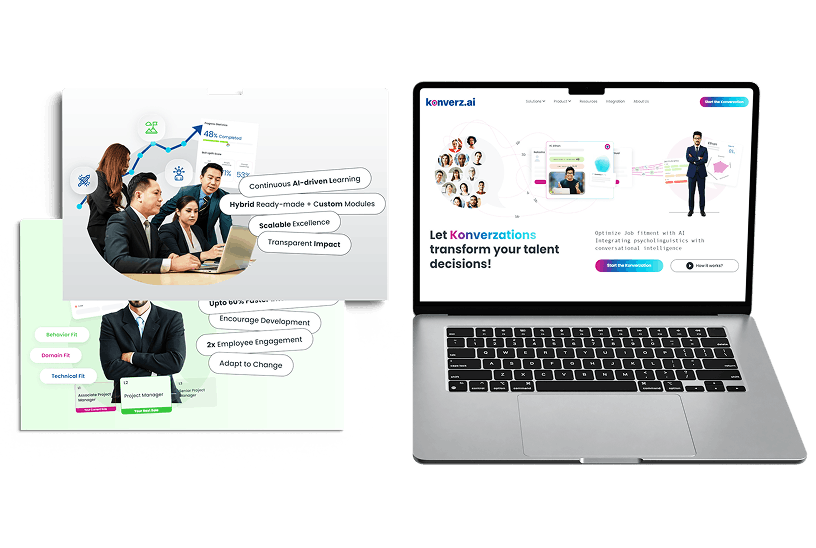
Project Context
Client
Konverz.ai
Niche
HR Tech · GenAI Interviewing
The Tech Stack
- Python
- FastAPI + Flask
- PostgreSQL
- OpenAI (Realtime APIs + GPT)
- Deepgram (Speech-to-Text)
- ElevenLabs (Text-to-Speech)
"We set out to build a realtime, conversationally AI-driven interviewing platform that compresses the hiring cycle and takes human bias out of candidate selection."
The brief was sharp: hiring teams should make faster, fairer, and more data-driven decisions, and candidates should never feel they are talking to a machine that does not understand them. Building that meant solving low-latency GenAI, on-the-fly evaluation, prompt guardrailing, and full reliability when the underlying AI services misbehave.

Founder, Konverz.ai
HR Tech · GenAI Interviewing
HOW WE BUILT IT
A Structured, Engineering-First Process for a Realtime GenAI Platform
Konverz.ai is not a wrapper around an LLM. It is a realtime conversational system with strict latency budgets, bias controls, and a reliability guarantee that holds even when the underlying GenAI provider goes down. Each milestone below was validated against those constraints before we moved forward.

DISCOVERY
A working session with the Konverz team to capture the hiring-cycle pain points, the three-engine vision, and the non-negotiables: realtime, fair, and reliably available.

REQUIREMENT ANALYSIS
Broke the brief into engines (Hire, Nurture, Coach), shared services (auth, jobs, reports), and the realtime
conversational layer that every engine depends on.

ARCHITECTURE & PLANNING
Designed the backend around OpenAI’s realtime APIs, a DB cache layer for latency, Deepgram for
STT, and ElevenLabs for TTS, all behind a FastAPI + Flask service layer on PostgreSQL.

PROMPT ENGINEERING
Crafted structured prompts to guardrail AI responses, reduce bias in evaluations, and keep on-the-fly scoring
consistent across candidates and roles.

REALTIME PIPELINE BUILD
Wired the candidate-side pipeline: voice in via Deepgram, reasoning and evaluation via OpenAI, and
dynamic voice out via ElevenLabs, all inside a sub-2.5-second latency budget.

FALLBACK & RELIABILITY
Built a fallback engine that queues, retries, and resumes interview evaluation if OpenAI is down, so a candidate never
has to re-appear and 100% of interviews are evaluated.

QA & LATENCY TESTING
Measured first-response time and average turn-by-turn latency on every release, with regression checks on bias
guardrails and structured evaluation output.

LAUNCH & HANDOVER
Released the Hire, Nurture, and Coach engines into production, with monitoring on latency, fallback activations, and evaluation
completion rate handed over to the Konverz team.
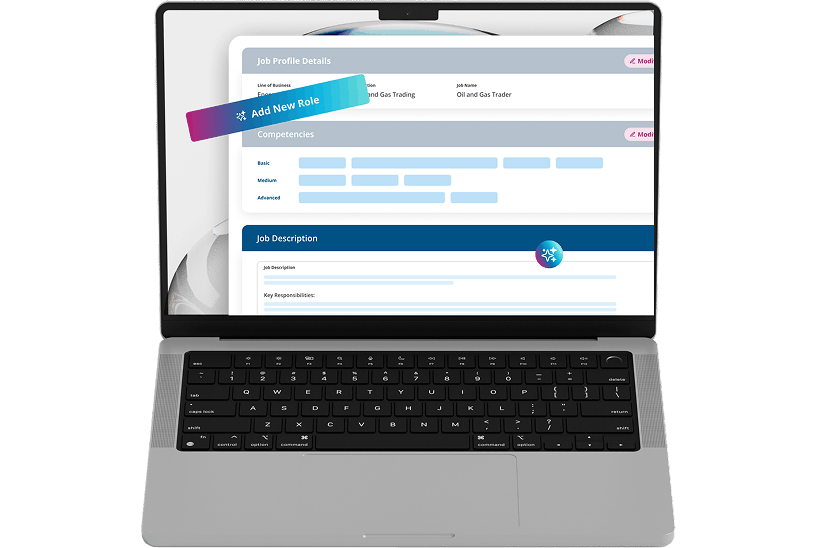
Job Creation Workflow for Hiring Managers
The entry point for every Hire-engine interview. Hiring managers configure the role, skills, depth, and evaluation parameters once, and the system shapes the interview flow accordingly. Job setup becomes a five-minute task instead of a multi-hour process across job descriptions, interviewer briefs, and rubric documents.
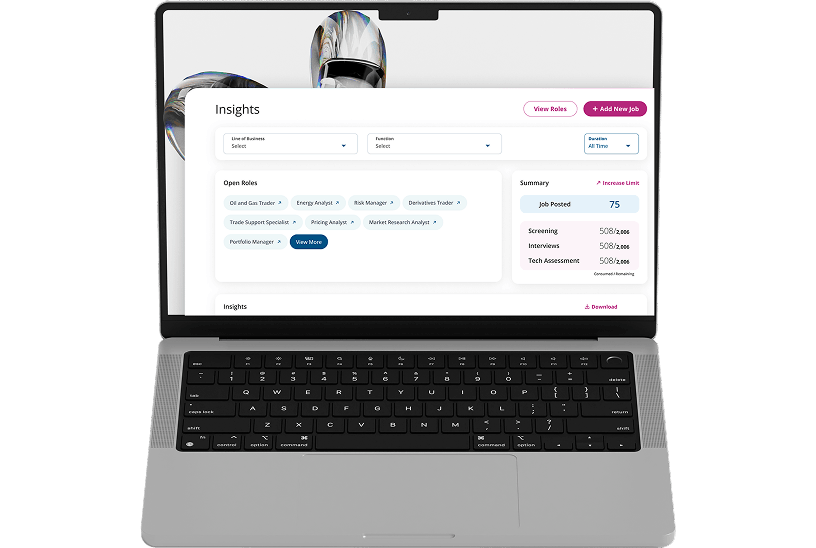
Hire Engine: AI Screening, Behavioural & Technical Interviews
The Hire engine runs AI-assisted screening, behavioural rounds, in-depth domain interviews, and technical assessments inside a single conversational flow. The candidate experiences one continuous conversation; the system runs distinct evaluation passes underneath, with each round contributing to the final report.
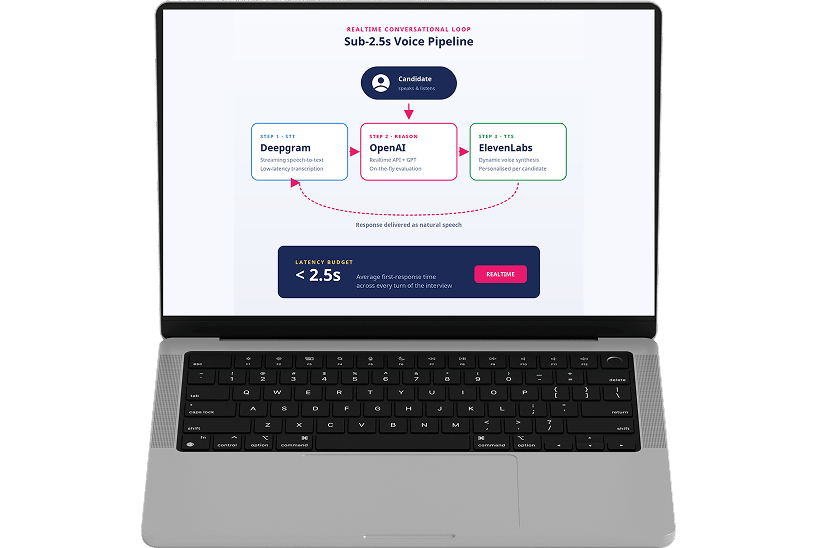
Realtime Conversational Pipeline: Deepgram → OpenAI → ElevenLabs
The candidate speaks. Deepgram transcribes the audio in realtime. OpenAI reasons, scores, and crafts the next response. ElevenLabs renders that response as natural speech with dynamic prompts that make every candidate feel personally addressed. The entire turn lands inside an average first-response time of under 2.5 seconds.
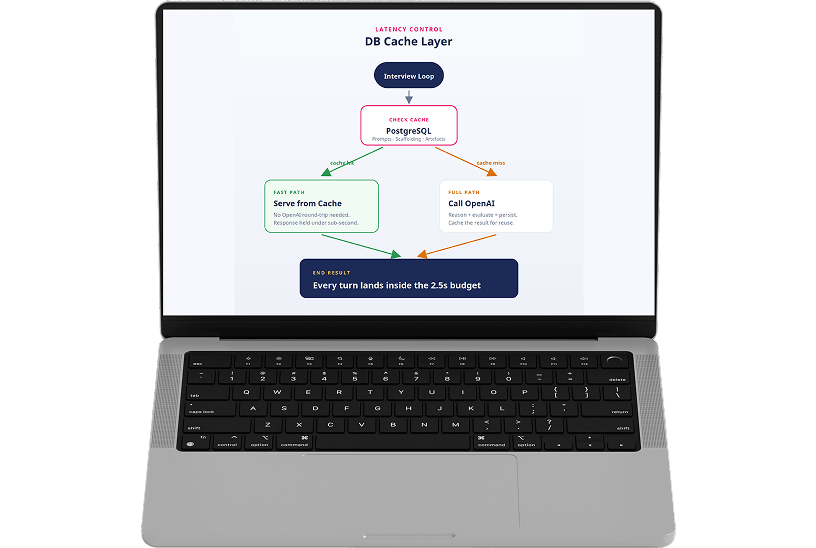
DB Cache Layer for Latency Control
A database-backed cache sits in front of the OpenAI calls to serve repeated reasoning artefacts, system prompts, and structured evaluation scaffolding without an extra round-trip. The cache is the reason a multi-step reasoning chain can still hit the 2.5-second budget end to end.
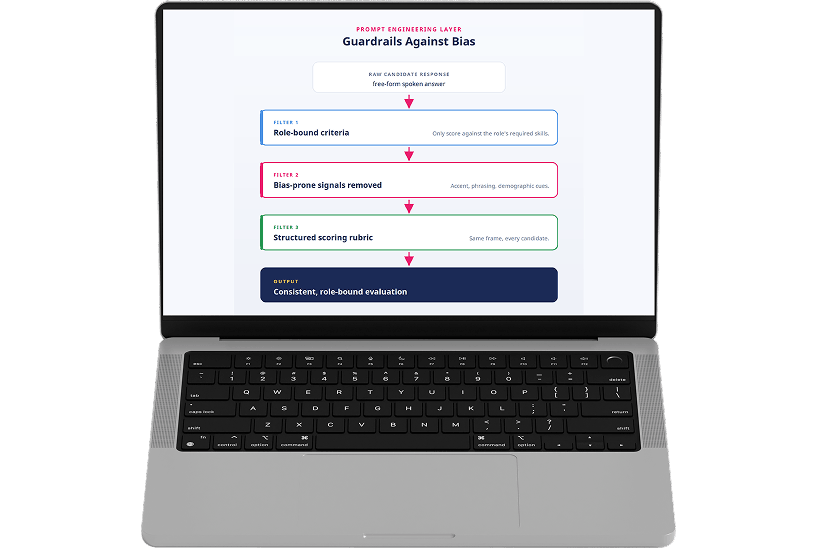
Bias Guardrails: Prompt Engineering Layer
Every AI response is shaped by a structured prompt layer that constrains evaluation criteria to the role and the skills, not the person. Bias-prone signals are filtered out before scoring. The same guardrails apply across screening, behavioural, and domain interviews so a candidate is judged consistently round to round.
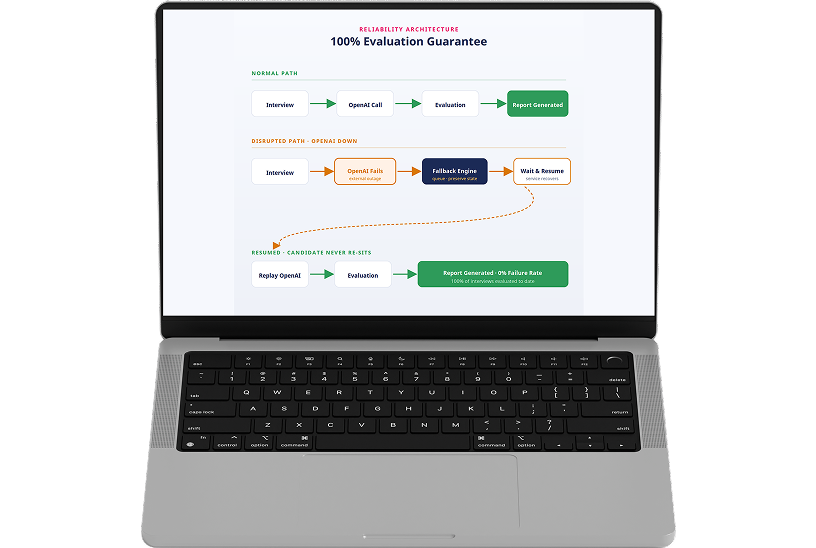
Fallback Engine: 100% Evaluation Guarantee
When OpenAI services go down for reasons outside our control, the fallback engine queues the in-flight interview state, waits for the service to recover, and resumes evaluation from where it stopped. Candidates do not have to re-appear for the same interview. 100% of started interviews are evaluated, with a 0% evaluation failure rate to date.
Candidate Evaluation Reports
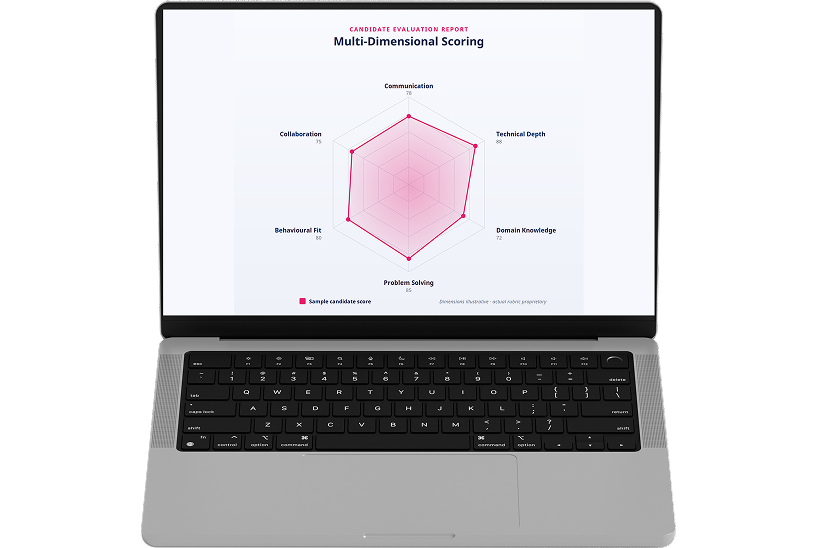
At the end of every interview, the system generates a structured report across a wide set of parameters (the parameter set is proprietary to Konverz). Hiring teams move from a transcript to a defensible decision in minutes, with consistent scoring that compares candidates against the same evaluation frame.
Nurture & Coach Engines
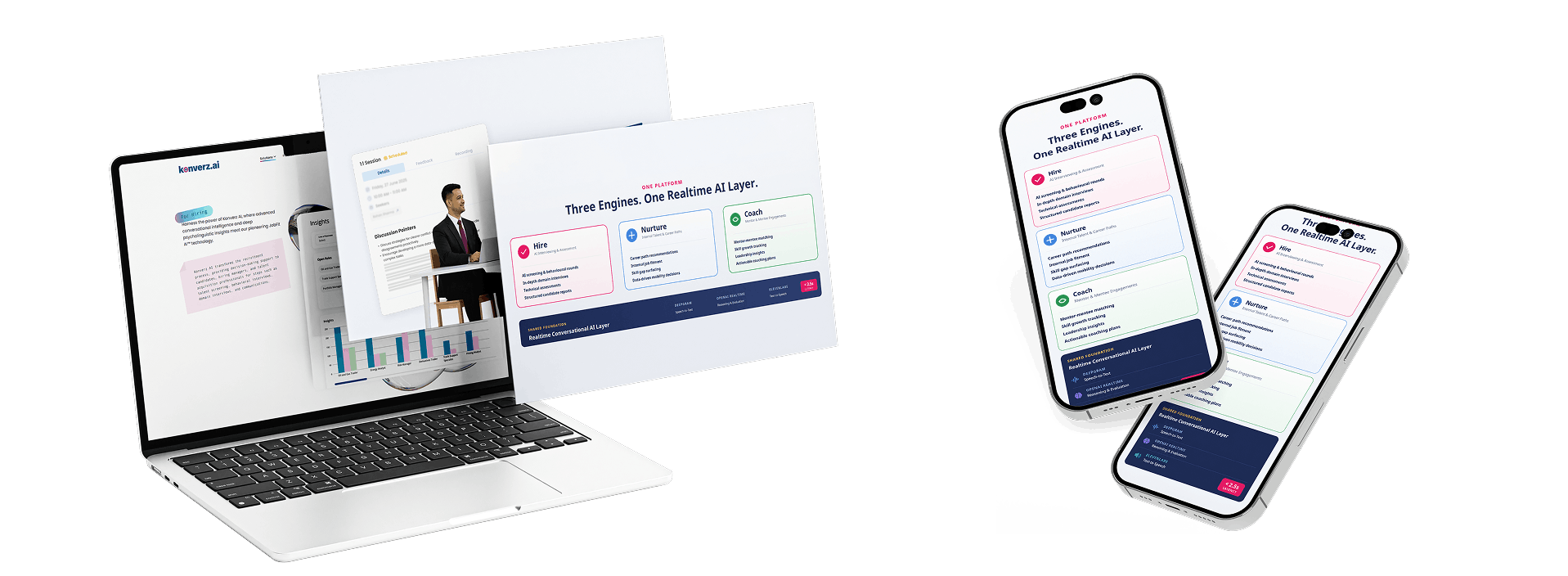
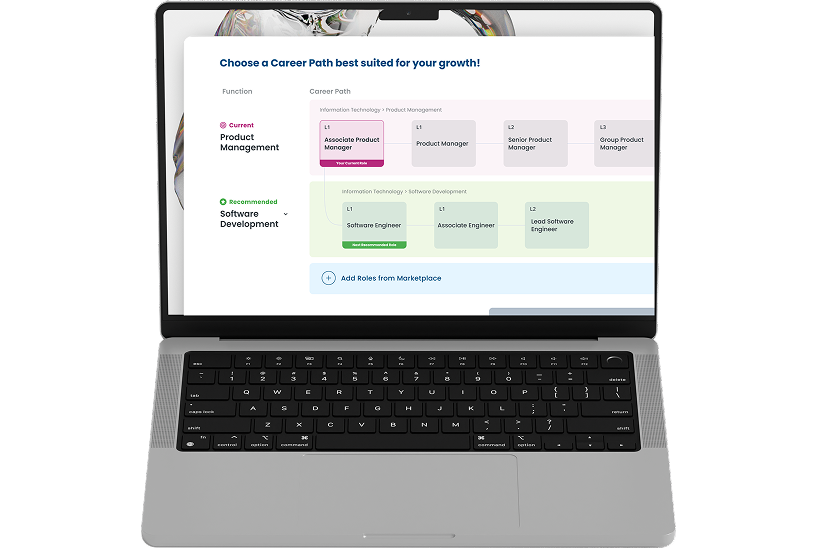
Nurture is a separate engine for organisations deploying career paths for internal talent, surfacing job fitments, and helping leadership take data-driven mobility decisions. Coach is a separate engine for mentor-mentee engagements, skill growth tracking, and actionable insights for leadership. Both engines sit on the same realtime conversational layer as Hire.
WHAT TO EXPECT FROM US
Transparent Engineering and Predictable Delivery for Realtime GenAI Products
If you are building a realtime AI product and weighing engineering partners, here is what working with our team actually looks like.

A plan before a proposal.
We start with a working session to understand what your product needs to do, who it serves, and where the hard parts are. For a GenAI product, that means surfacing the latency, reliability, and guardrail constraints before we write a line of code.

A live demo every two weeks.
At the end of every sprint, you see the actual product: what is built, what is working, and what we are still figuring out. You always know where your product stands.

Engineering, not prompt tweaking.
GenAI products live or die on the engineering around the model: caching, fallback, prompt structure, evaluation, observability. We treat the model as one component in a real system, not the system itself.

Experience with the hard parts.
Realtime audio, third-party API instability, structured evaluation, prompt guardrails: we have shipped these into production. They are not research projects for us, which means you skip a year of trial and error.

Quality that does not depend on one person.
Every change is tested before it reaches you. Latency, fallback behaviour, and evaluation output are regression-checked on every release, not by one engineer eyeballing a transcript.

Reliability built in from day one.
Third-party AI services will fail. Your product should not. We design fallback, retry, and state preservation into the architecture from the first sprint, not as a bolt-on after the first outage.

You own what we build.
At handover you get the full system: source code, prompt libraries, evaluation rubrics, infrastructure, and documentation. Your team can take it forward independently or keep us on; that is your choice.

A founder-friendly working rhythm.
You are in every demo, every trade-off conversation, every milestone. You are not a ticket number to us; you are the product’s first and most important user.