Hybrid App Development Company
Establish your businesses across multiple platforms with our hybrid app development solutions.
Let our expert team guide you through the transformative journey of harnessing the potential of hybrid apps so that you can better reach your customers and provide them with a smooth user experience.

600 + REVIEWS

75 + REVIEWS

150 + REVIEWS

85 + REVIEWS
Hybrid App Development Services We Offer
You can count on us to deliver the best hybrid app services for your business that your customers will enjoy.


React Native Development
Give your users exceptional functionality and a smooth experience with our React native development. Our team possesses extensive knowledge of this Javascript framework and native APIs to create a feature-rich app from scratch or optimize your existing app.
React Native Development
React Native Development
Give your users exceptional functionality and a smooth experience with our React native development. Our team possesses extensive knowledge of this Javascript framework and native APIs to create a feature-rich app from scratch or optimize your existing app.
Ionic Development
Ionic Development
Enrich your customers’ app experience by giving them stunning and flexible UIs with our Ionic development services. Our team will help you plugin gestures, optimize performance, and more in your business application.
Hybrid App Migration
Hybrid App Migration
With our advanced application migration capabilities, we ensure that your business seamlessly transitions from an existing tech stack to a hybrid app framework hassle-free.
Maintenance and Support
Maintenance and Support
We offer 24/7 maintenance and support services to ensure your app runs smoothly, even in high-traffic times. Our team of developers will help you resolve any issue you experience, even post-launch.
Advantages of Hybrid App Development
This type of app development is becoming increasingly popular, and a large number of businesses are opting for such applications for good reasons.

Cost-Effective
Developing a hybrid mobile application is significantly more cost-effective than creating separate apps for different platforms, such as iOS and Android.

Easier Maintainance
Since both React Native and Ionic frameworks save all the code in one shared repository, maintaining hybrid apps is extremely efficient. Developers can easily access and debug the code in one place.

Appealing UI/UX
These frameworks also focus on user interface and experience, enabling you to provide your customers with visually appealing and responsive mobile apps.

Quick Deployment
In contrast to platform-specific app development, hybrid mobile applications can be deployed quickly and easily as they do not require coding from scratch.

Speed Optimization
Hybrid applications boast quicker loading times as all resources and libraries, like images, can be preloaded into the main package. Therefore, when users access the app, the application does not need to fetch resources from external servers.

Offline Functionality
Hybrid applications also provide offline functionality, enabling users to access content and features even when not connected to the internet.
Our Portfolio
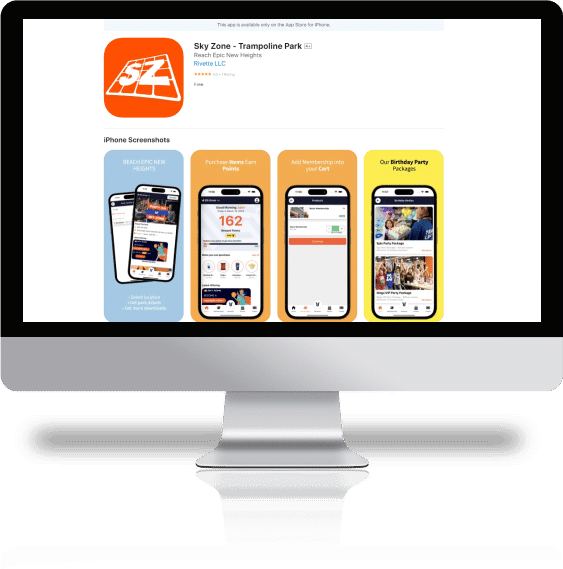
Sky Zone – Trampoline Park
This app is your one-stop shop for everything Sky Zone, offering features that make planning and enjoying your visit a breeze
Website
https://apps.apple.com/us/app/sky-zone-trampoline-park/id6484068671
Industry
Entertainment
Services Offered
React Native App Development
Approach
Using Redux, we ensured efficient state management and responsiveness of the app on both iOS and Android platforms.
Challenges
Manual booking processes can result in extended wait times for tickets and party reservations.
Results
With the Sky Zone mobile app, users can focus on what matters most: enjoying themselves. The app’s intuitive design and ease of access significantly enhance the user experience, setting a new benchmark for the trampoline park industry.


Our Hybrid App Development Process
We understand the importance of a thorough and well-defined process for developing your ideal hybrid application. Here’s a breakdown of our approach:

Analysis and Conceptualization
Our team begins the process with a comprehensive analysis and gathering requirements, followed by planning a wireframe with an unmatched experience for your customers.

Design and Development
After evaluating your needs, we create detailed wireframes and prototypes to help you visualize the future of your app. At this stage, we also implement all of your website pages and content in a CMS.

Quality Assurance and Testing
To ensure the ideal user experience, we rigorously test the app, analyzing every detail, including appearance and performance. The app only gets a pass if it matches our high standards.

Deployment and Launch
Once you and our team of developers approve the app, we’ll guide you through the deployment to ensure a smooth launch.
Our Technology Stack
We are adept at all possible tech stack for both web and mobile, as well as a wide range of platforms,
languages, and database systems.


















Why Choose Our Hybrid App Development Services
Stay ahead of your competitors with our team, which possesses extensive knowledge of the industry and a focus on excellence. We are the go-to expert for hybrid app development.

Experienced Developers
Our seasoned developers deeply understand the frameworks, APIs, and best practices for React Native and Ionic. They ensure your hybrid app is stable, fast, and user-friendly across all platforms.

Goal-Oriented
Whether you’re looking to build an entirely new app or optimize your existing business app, our dedicated developers will deliver the best app for your target audience within a set time frame.

Regular Communication
We prioritize open communication throughout the development lifecycle. Regular progress reports, clear code documentation, and readily available team members ensure you’re informed and involved at every step.

Enhanced Security
When it comes to security, our developers take zero chances. They implement robust security practices to secure your app and user data throughout development.
Customized Solutions
We understand that your app should be as unique as your business. Therefore, we take the time to understand your business and pain points so that we can create a unique, personalized solution.
Future Enhancements
By choosing our services, you can be sure you are well-positioned to incorporate the latest advancements into your application. We provide the necessary support and expertise well after the app development process.
Take A Look At Our Clients
WebSpero empowers top brands to let them dominate digitally.



































Here’s What Our Clients Are Talking About Us
We’ve made it our mission to lead by example
“I am extremely satisfied with WebSpero’s web development service! They built a beautiful and highly functional website for my business. The team was professional, responsive, and attentive to all my requirements. They delivered the project on time. I highly recommend their services to anyone looking for top-notch web development solutions.”

Choosing WebSpero for our web development needs was a game-changer for our business. They transformed our outdated website into a modern, user-friendly platform that has significantly improved our online presence. Their team’s dedication and attention to detail truly set them apart.

WebSpero’s web development service is top-notch! From the initial consultation to the final launch, they guided us through the entire process with professionalism and expertise. Their team worked tirelessly to create a website that perfectly represents our brand and delivers an exceptional user experience. We couldn’t be happier with the results!

As a startup, we needed a reliable web development partner, and WebSpero proved to be the best choice we could have made. They not only delivered a visually appealing and fully functional website but also provided valuable insights and suggestions to enhance its performance. Their commitment to delivering quality work is commendable, and we look forward to continuing our collaboration with them.

I cannot thank WebSpero enough for their exceptional web development service. They transformed our outdated website into a modern, responsive platform that has received rave reviews from our customers. Their attention to detail and proactive approach made the entire process seamless and enjoyable. Webspero is the best choice for anyone seeking professional web development solutions.

Industry We Serve
WebSpero empowers top brands to let them dominate digitally.

Real Estate

Event Organization

Beauty

Travel

Baby Sitting

Food & Beverage

CBD

Legal, Law

Doctors

Home Improvements

Automotive

Asset Management

Health

Sports

Fashion

Agency

Accounting

Fitness

Business Software

Music

Plumbing