
SEO Case Study
Licensing Intent Unlocked: 1,077% Traffic Growth for Realty Course
Mapping content to every stage of the Canadian real estate licensing pathway, from initial career research through provincial exam preparation, gave a specialist exam prep platform a structured organic presence that broad, single-page keyword targeting could not have produced.
Client
Realty Course
Niche
Real Estate Licensing Education / Canada
Duration
6-Month Campaign
+1,077%
Traffic growth

+1,594
Net new sessions/mo
+505
New keywords ranked

The Client
Realty Course: Canadian Real Estate Licensing Exam Prep
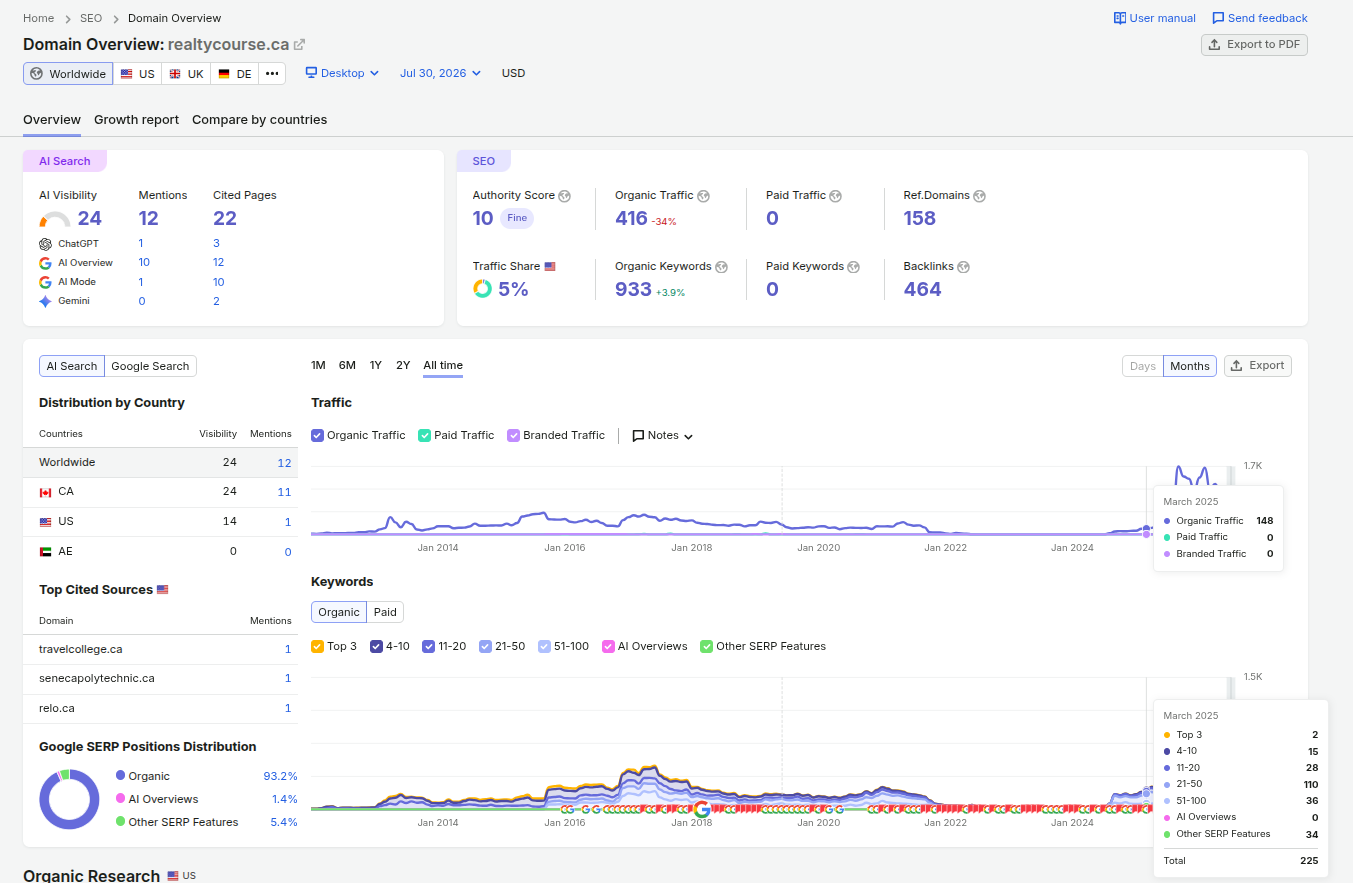
Realty Course is a Canadian online education platform offering study materials and exam preparation for aspiring real estate agents pursuing provincial licensing. The platform serves candidates working through structured licensing pathways across Canadian provinces, where passing regulatory exams is a mandatory step before practising. At campaign start, the site ranked for 225 keywords but generated minimal organic traffic, with most of its keyword footprint buried in positions 21 and below.
THE CHALLENGE
High-Intent Audience, Low Organic Reach in a Credentialled Niche

Rankings Concentrated Below Position 20
Of 225 keywords ranked at campaign start, 110 sat in positions 21-50 and 36 in positions 51-100. Only 2 keywords ranked in the top 3. The site was visible in search but not generating traffic, as the majority of its rankings fell outside the positions where clicks actually occur for high-intent educational queries.
Thin Coverage of the Licensing Journey
Candidates searching for real estate licensing information follow a defined sequence of queries from initial research through exam registration to post-exam next steps. The site’s content covered some of this pathway but left significant gaps at key decision points, meaning search traffic was being captured by established national education platforms and provincial regulatory bodies at critical stages.
Competing Against Institutional Authority
Provincial real estate councils and established national training providers hold strong domain authority on core licensing queries. For an independent exam prep platform, competing directly on broad licensing terms required building topical depth that signalled genuine subject expertise rather than relying on single-page keyword targeting.
Underdeveloped SERP Feature Presence
The site held 34 SERP feature placements at campaign start, with no AI Overview appearances. Licensing candidates frequently search for structured information about exam formats, study timelines, and pass requirements, and these queries produce rich SERP features. Not capturing them left a large secondary visibility surface untouched in a category where structured content performs strongly.
Our Approach
Pathway-Led SEO: Mapping Content to the Full Licensing Journey
Our strategy for Realty Course was built on one insight: real estate licensing candidates search in a predictable sequence, and the site was only visible at a fraction of that sequence. We focused on mapping content to every stage of the licensing pathway, from initial career research through exam preparation to provincial registration, so the platform could capture candidates at the moment each question became relevant.
Licensing Pathway Content Architecture
The site’s content was restructured around the distinct stages a licensing candidate moves through: researching requirements, choosing a course, preparing for exams, and understanding post-exam next steps. Each stage was treated as a separate content cluster with its own set of target queries, ensuring the platform had coverage at every point where a candidate might search rather than only around the exam preparation phase itself.
Province-Specific Query Targeting
Canadian real estate licensing requirements vary by province, and candidates search using province-specific language. Content was developed and optimised at the provincial level to capture this segmented demand, rather than targeting generic national terms where regulatory bodies and large incumbents already held strong positions. This created a differentiated footprint that addressed the real specificity of how candidates search.
SERP Feature Optimisation for Exam Queries
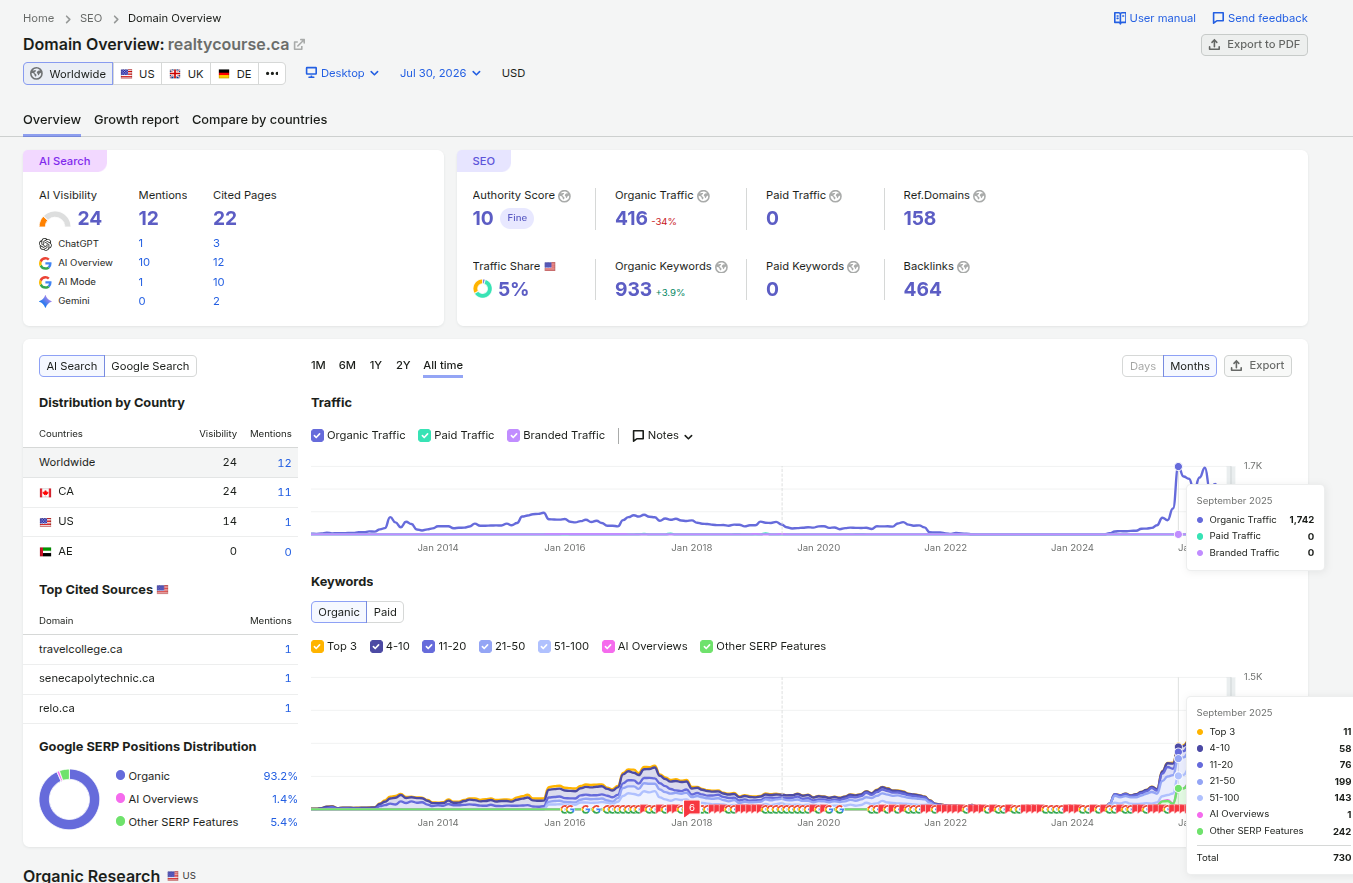
Exam-related queries produce a high concentration of featured snippets, People Also Ask boxes, and structured results because candidates are looking for specific, verifiable information. Content was formatted to answer these questions directly, with structured headers, concise answer blocks, and question-based subheadings. SERP feature placements grew from 34 to 242 over the campaign period.
Position Band Elevation on Existing Rankings
With 146 keywords already ranking between positions 21 and 100 at campaign start, on-page improvements were applied to pages with demonstrated relevance to move them into traffic-generating positions. Top 3 rankings increased from 2 to 11, and keywords in positions 4-10 grew from 15 to 58, multiplying click volume from a keyword base that already had indexed traction.
The Impact
1,077% Traffic Growth Across Six Months
+1,077%
Monthly organic traffic (148 → 1,742)
+505
New keyword rankings
34 → 242
SERP feature placements
“Realty Course now holds a structured organic presence across the full Canadian licensing journey, capturing candidates at every stage from initial research to exam registration, with a keyword footprint that established institutional players cannot easily replicate through general authority alone.”
Actionable Insights
What Professional Education Brands Can Learn From This Campaign
Map Content to the Candidate Journey
Professional certification and licensing candidates follow structured, predictable search sequences tied to the stages of their qualification pathway. Platforms that build content at every stage, not just around their core product, capture candidates at the moment each question becomes relevant rather than only when purchase intent is already formed.
Geographic Specificity Beats National Breadth
In markets where requirements vary by province, state, or region, searchers use location-specific language. Targeting the specific terminology candidates use in their jurisdiction produces higher relevance signals than competing on broad national terms where institutional authorities and large platforms already hold strong positions
Exam Queries Are Structurally SERP-Rich
Queries about exam formats, pass rates, study timelines, and registration requirements generate a high density of featured snippets and structured results because searchers want specific, verifiable answers. Formatting content to answer these questions directly, with clear headers and concise answer blocks, captures SERP feature placements that substantially increase visibility beyond core organic rankings.
Existing Rankings Are a Growth Asset
A large cluster of keywords already indexed between positions 21 and 100 represents proven relevance with untapped click potential. Targeted on-page improvements to these pages deliver faster traffic gains than building new content from zero, because the ranking signal already exists and needs refinement rather than establishment.