
SEO CASE STUDY
241% Growth for High Thrive Counseling
How a therapy and counseling practice built direct organic visibility in a YMYL category dominated by major directories — without referral dependency or ad spend.
Client
High Thrive Counseling
Niche
Therapy & Counseling
Duration
5 months
+241%
Traffic growth

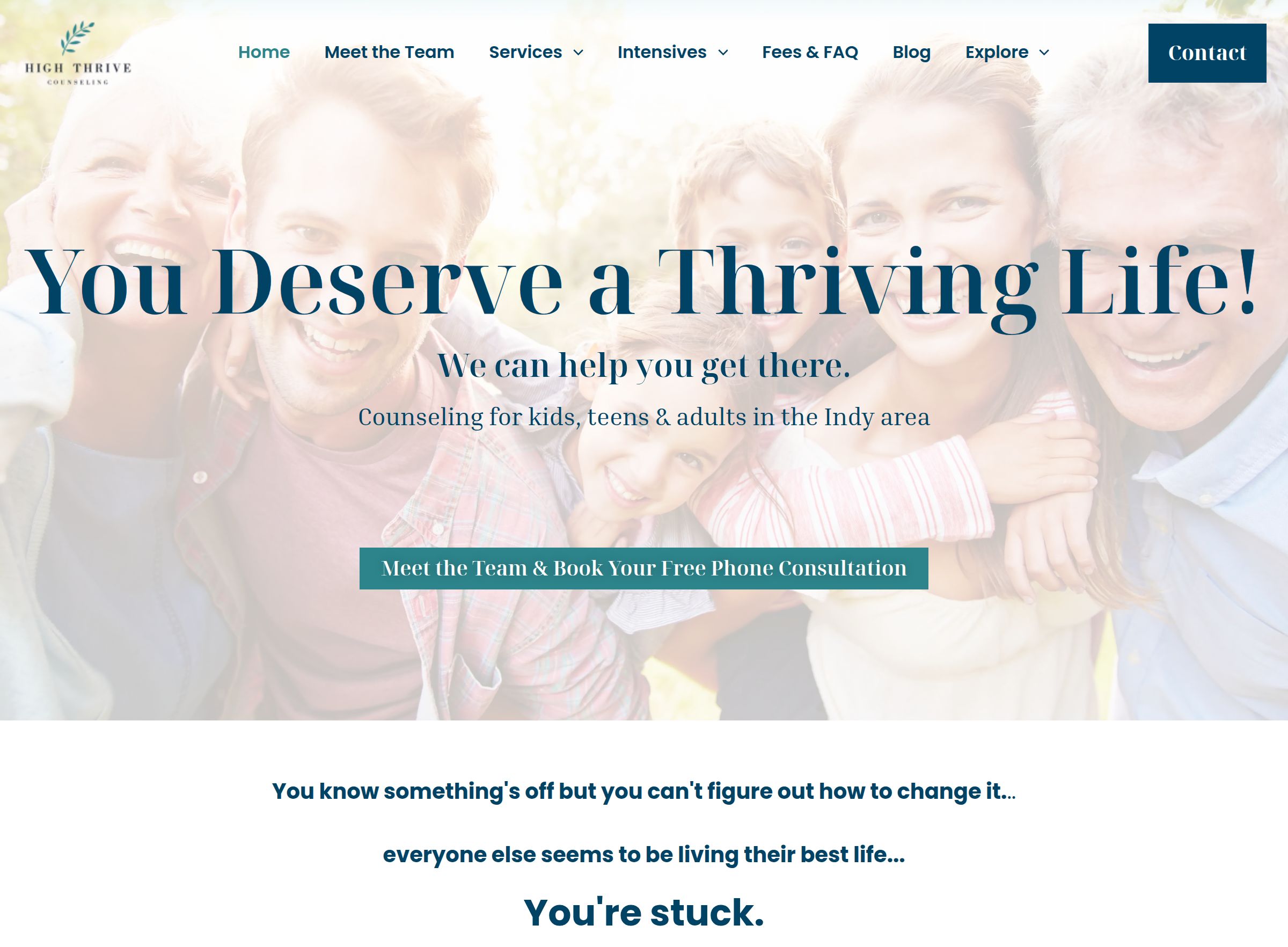
The Client
High Thrive Counseling: A Specialist Practice in a High-Intent Category
High Thrive Counseling is a therapy and counseling practice serving clients across anxiety, trauma, relationship issues, and grief. The practice offers multiple modalities — CBT, EMDR, somatic therapy, couples counseling — and operates in a category where Google holds real commercial weight: people searching for a therapist are often ready to book.
THE CHALLENGE
A High-Intent Category With High Barriers to Organic Visibility

Referral-Capped Growth
The practice’s client acquisition relied on referrals and insurance networks. These channels are valuable but finite — they can’t capture searchers who have no prior connection to the practice and are actively looking for a therapist right now.
YMYL E-E-A-T Requirements
Therapy is a YMYL category — Google applies strict expertise, experience, authoritativeness, and trustworthiness standards before ranking mental health content. Practitioner credentials, clinical credentials, and transparent methodology are prerequisites for visibility, not optional additions.
Directory Dominance in Local Results
Major therapy aggregators and telehealth platforms occupy the top positions for most high-intent counseling searches. Competing for direct organic visibility requires a strategy built specifically around the signals that differentiate a local practice from a national listing platform.
No Informational Content Layer
The highest-volume therapy searches are informational — “how to know if you need therapy,” “what does CBT involve,” “signs of trauma.” Without content targeting this layer, the practice was invisible to potential clients in the research phase before they search for a specific provider.
Our Approach
Trust-First SEO: Ranking in a Category Where Credibility Is the Product
Our strategy for High Thrive Counseling was built on one insight: in mental health search, trust signals aren’t a ranking factor — they are the product. We focused on building the E-E-A-T foundation that Google requires for YMYL content while simultaneously targeting the full search journey: from early-stage informational queries to high-intent local searches.
Local SEO & Practice Visibility
Optimised the Google Business Profile with counseling specialty categories, service areas, and practitioner credentials. Built citation consistency across mental health directories and healthcare listings. Developed geo-targeted landing pages for each specialty and location — giving the practice a direct organic footprint independent of directory platforms.
E-E-A-T Content for Mental Health Search
Optimised the Google Business Profile with counseling specialty categories, service areas, and practitioner credentials. Built citation consistency across mental health directories and healthcare listings. Developed geo-targeted landing pages for each specialty and location — giving the practice a direct organic footprint independent of directory platforms.
Specialty & Modality Content
Built dedicated pages for each therapy modality and specialty — CBT, EMDR, somatic therapy, couples counseling — targeting both modality-specific searches and condition-specific queries that indicate active need. Implemented health professional and local business schema to strengthen SERP appearance for practice-specific searches.
The Impact
241% Traffic Growth in 5 Months
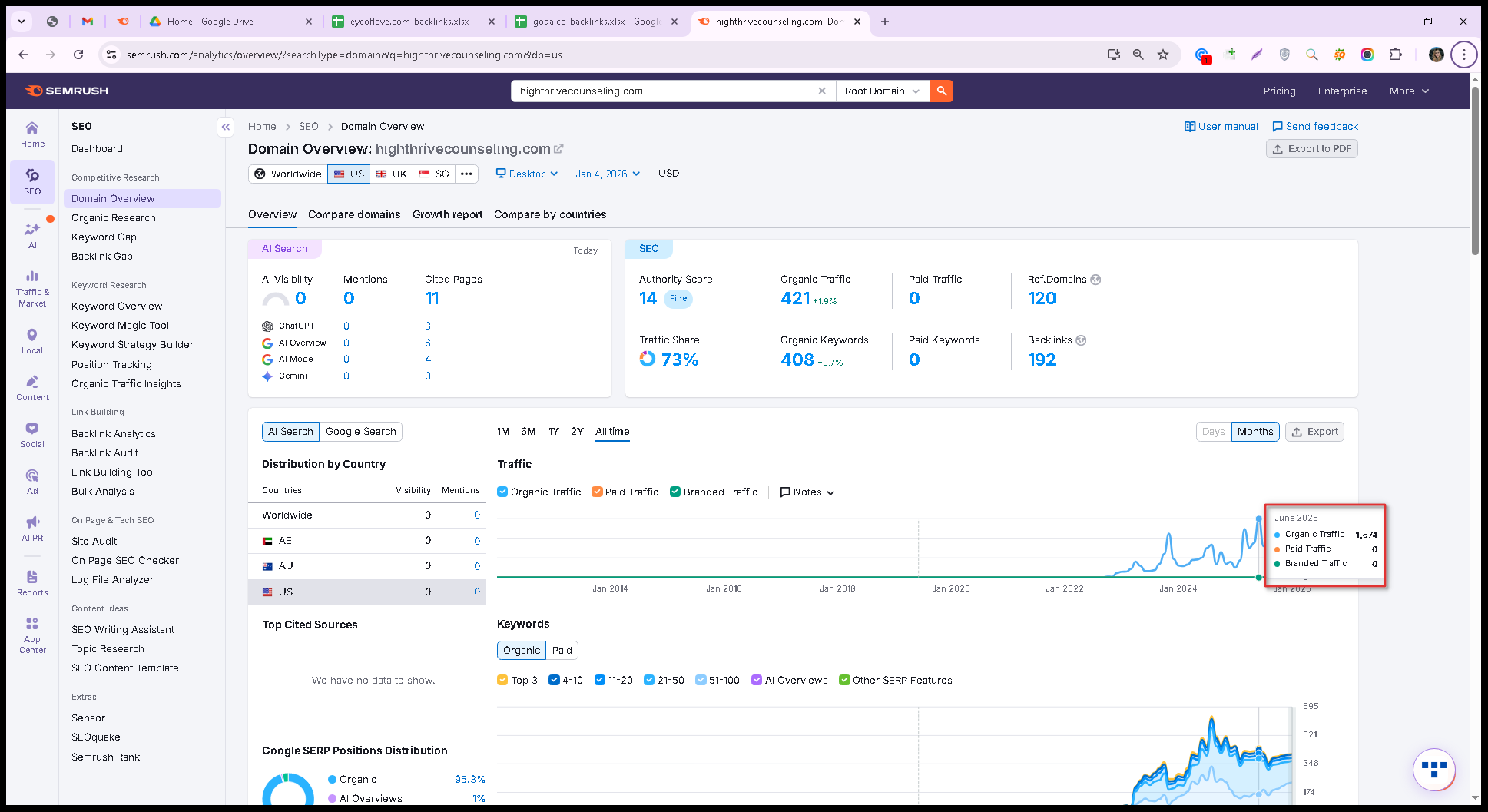
+241%
Organic traffic growth
“High Thrive Counseling now reaches clients at the moment they decide to seek help — not only those who arrive through a referral chain, but anyone searching for a therapist in their area, in their specialty, right now.”
Actionable Insights
What Therapy Practices Can Learn From This Campaign
Referrals Cap Growth; Search Doesn't
Referral networks reach people already connected to your practice. Organic search captures clients with no prior connection who are actively looking right now. The two channels serve different audiences — and only one compounds over time without ongoing spend or relationship maintenance.
E-E-A-T Is Non-Negotiable in YMYL Categories
Mental health content sits in Google’s highest-scrutiny tier. Practitioner credentials, transparent methodology, and clinical specificity aren’t optional trust signals — they’re the baseline for ranking. Practices that publish generic wellness content without E-E-A-T signals will be outranked by any site that does.
Target the Research Phase, Not Just the Decision Phase
Most therapy searches happen before someone is ready to name a provider. Informational content — what to expect from counseling, how different modalities work, how to know if you need support — captures potential clients earlier and builds the trust that converts them when they are ready to book.
Direct Visibility Beats Directory Dependency
Therapy aggregators dominate category searches, but they don’t own local and specialty-specific queries. A practice with strong local SEO, modality pages, and practitioner content can rank directly for the searches that matter most — without paying directory fees or competing on profile completeness inside a platform it doesn’t control.