
SEO CASE STUDY
Fandom Content Into Commerce: 66% Growth for ARTSABERS
Pairing character and lore content with a structured product catalogue gave a lightsaber retailer a keyword footprint that captured Star Wars fandom searches at the top of the funnel and converted them into buyers further down.
RF Dance
ARTSABERS
Niche
Lightsaber and Cosplay Retail
Duration
6-Month Campaign
+66%
Traffic growth

+66%
Traffic growth
+3,133
New keywords ranked
+111
New top 3 rankings
The Client
ARTSABERS: Lightsabers and Cosplay Gear for Collectors and Duelists
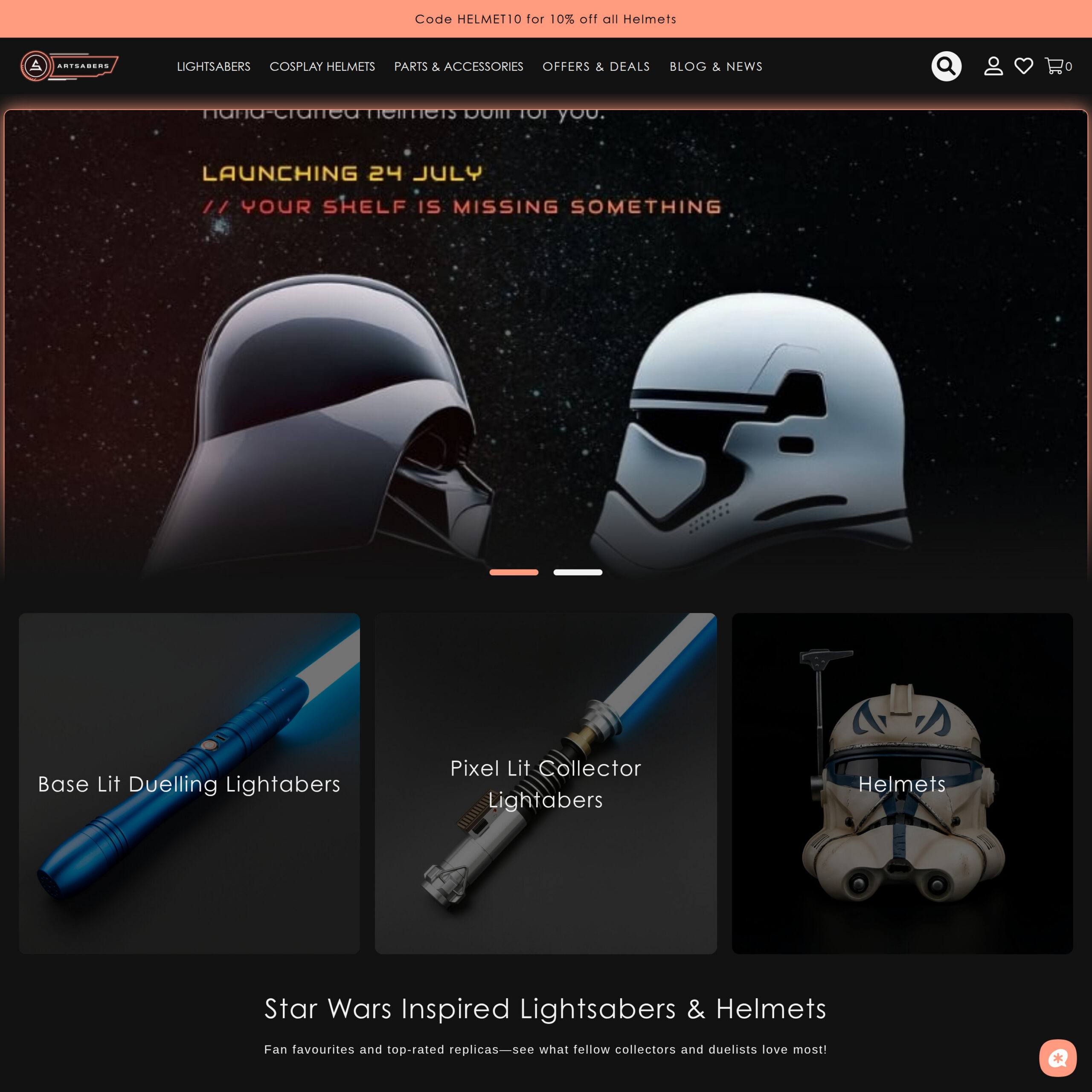
ARTSABERS is a lightsaber and cosplay helmet retailer carrying 300+ saber models and 70+ Star Wars-inspired helmets, stocked in the US for free worldwide delivery. The catalogue spans electronics tiers from S-RGB to Proffie, character replicas across the full Star Wars universe, and exclusive designs. It serves collectors, duelists, and cosplayers, with the US as the primary market alongside the UK and Canada.
THE CHALLENGE
A Deep Catalogue in a Fandom-Driven Search Market

Rankings Concentrated Outside the Top 10
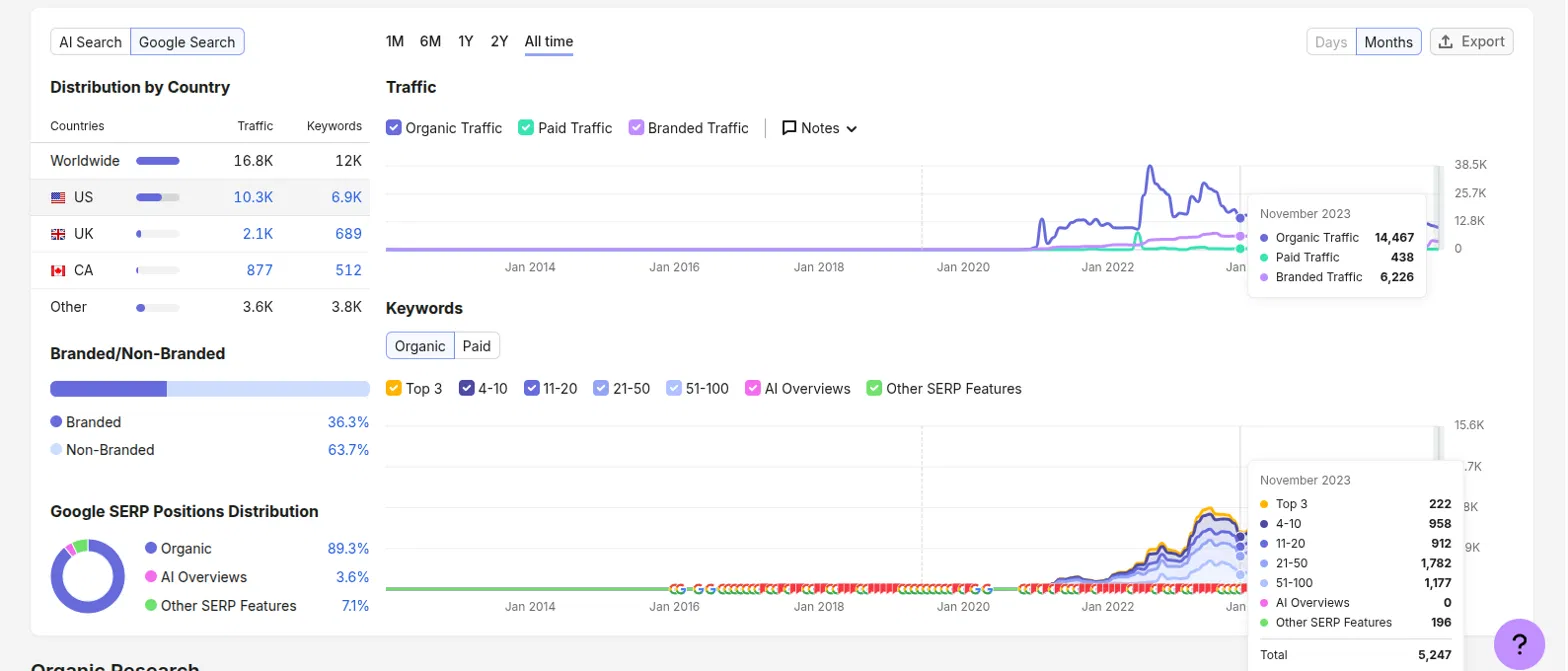
At campaign start, 1,782 keywords sat in positions 21-50 and 1,177 in positions 51-100. Only 222 held top 3 positions. The catalogue had search presence but the majority of its rankings fell below the positions that drive meaningful click volume for both product and character queries.
Informational Demand Untapped by Product Pages
71.6% of the site’s keyword base carries informational intent. Buyers in this category research character backstories, saber types, and lore before deciding what to buy. Product-only pages cannot capture this upstream demand, and the site lacked the content structure to rank for fandom queries that precede purchase.
Competing Across Product and Fandom Query Spaces
Lightsaber retail queries compete against established cosplay platforms and fan wikis that hold strong authority on character and lore content. Ranking across both product terms and fandom informational queries requires a content architecture that serves both intents rather than optimising for one at the expense of the other.
Large Catalogue With Uneven Search Coverage
With 300+ saber models and 70+ helmets organised by character, electronics tier, hilt style, and faction, the catalogue generates a wide range of specific product queries. Without structured category and character pages, much of this long-tail demand was unaddressed, leaving purchase-intent traffic to better-structured competitors.
Our Approach
Catalogue Depth Meets Fandom Search Intent
Our strategy for ARTSABERS was built on one insight: in fandom-driven retail, buyers discover products through character and lore interest before they search by product spec. We focused on building content that captured both entry points, so fandom searches at the top of the funnel fed into structured product and character pages lower down.
Character and Lore Content Buildout
Content was developed around Star Wars characters, factions, and lore topics that carry consistent informational search demand. Terms like “female star wars characters” sit at the top of the funnel for buyers who will subsequently search for a specific character’s saber. Ranking here created a discovery path into the product catalogue that product pages alone cannot generate.
Character-Level Product Page Optimisation
Product pages organised by character were optimised to rank for character-specific saber queries, connecting lore interest to purchase. Pages for individual characters like Darth Vader, Ahsoka Tano, and Mace Windu were structured to answer both “what lightsaber does X use” and “buy X lightsaber” in a single destination, reducing drop-off between discovery and conversion.
Electronics Tier and Category Coverage
The catalogue’s electronics tiers (S-RGB, Xenopixel, Proffie) generate distinct spec-comparison queries from buyers deciding on technology level before choosing a specific model. Category pages were structured to capture these mid-funnel comparison searches, giving the site visibility at the point where buyers are narrowing down by product capability rather than character.
The Impact
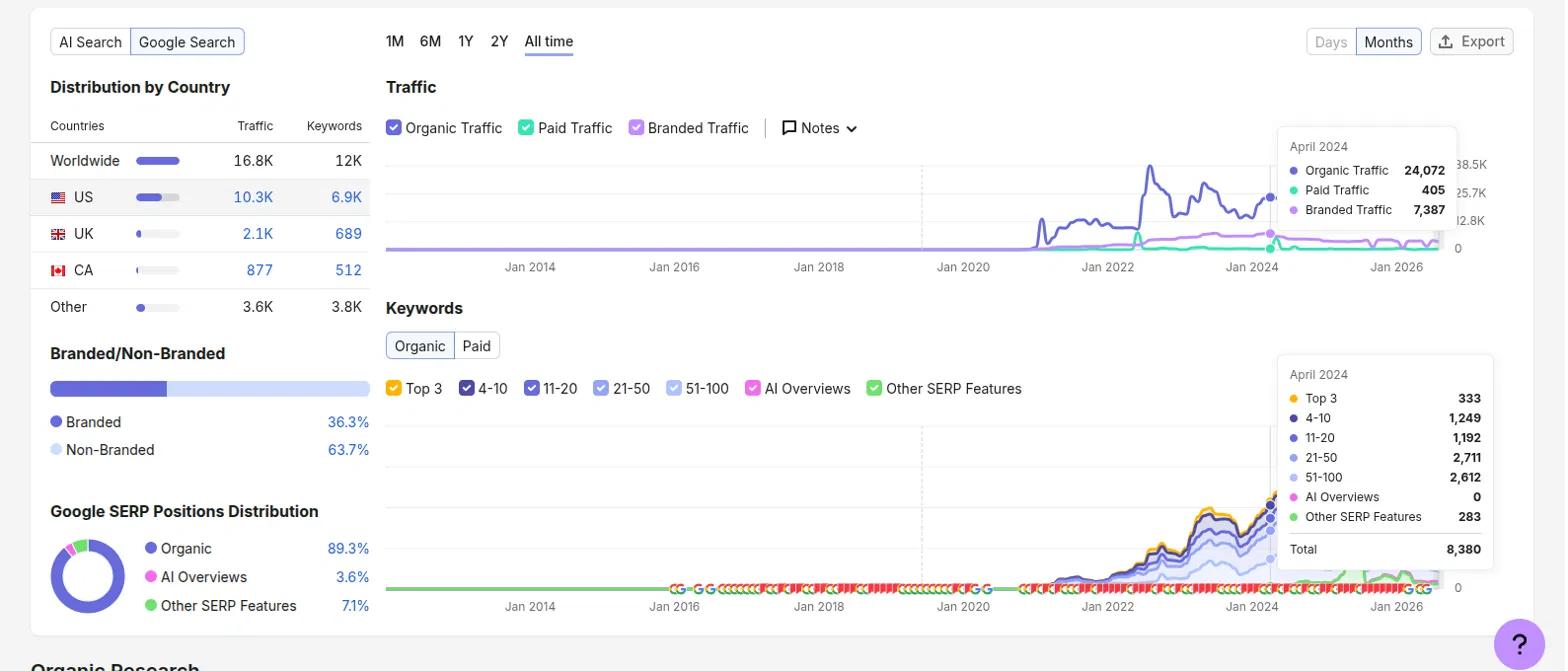
14,467 to 24,072 Monthly Visitors Across Six Months
+66%
Monthly organic traffic (14,467 → 24,072)
+3,133
New keyword rankings (5,247 → 8,380)
222 → 333
Top 3 keyword rankings
“ARTSABERS now holds search presence across both the fandom discovery layer and the product purchase layer, giving the catalogue a compounding organic footprint that grows as new Star Wars content releases expand character search demand.”
Actionable Insights
What Fandom and Collectables Retailers Can Learn
Fandom Searches Are Top-of-Funnel Product Queries
In IP-driven retail, buyers arrive through character and lore interest before they know what they want to buy. Retailers that only target product and spec queries miss the majority of the search journey. Building content that captures character and fandom searches creates a pipeline that feeds product pages rather than leaving that traffic to fan wikis and editorial platforms.
Character Pages Bridge Discovery and Purchase
A character page that answers both lore questions and links directly to matching products removes the break between informational and commercial intent. Buyers who land on “Darth Vader lightsaber” content and find a purchase option in the same destination convert at a higher rate than those who have to navigate to a product separately after consuming information elsewhere.
Catalogue Taxonomy Creates Long-Tail Coverage
A large product catalogue organised by multiple axes, character, electronics tier, faction, hilt style, generates a long-tail keyword footprint that grows with the catalogue. Each taxonomy dimension produces its own set of rankable queries, so structuring category pages to reflect how buyers actually filter products compounds keyword coverage without requiring additional content production.
New IP Releases Expand Organic Opportunity
For retailers tied to an active franchise, new film or series releases generate search demand spikes around new characters and saber designs. Retailers with existing topical authority around the franchise capture this demand immediately. Building that authority before releases, rather than reacting to them, is what turns an IP release into an organic traffic event rather than a missed opportunity.