
SEO Case Study
Destination Depth as an SEO Strategy: 515% Growth for The Travel Fugitive
By mapping each destination to its full cluster of related queries and restructuring content to capture image pack and People Also Ask placements, a niche travel blog turned an existing content archive into a compounding organic channel.
Client
The Travel Fugitive
Niche
Travel Blog / Destination Content
Duration
6-Month Campaign
+10.4K
Net new sessions/mo

+515%
Traffic growth
12.4K
Monthly visitors
+10.4K
Net new sessions/mo
+1.3K
New keywords ranked
The Client
The Travel Fugitive: A Destination-First Travel Blog
The Travel Fugitive is a travel blog covering destinations across Africa, Asia, and the Middle East, with content focused on independent travellers seeking first-hand destination guides, local insights, and practical trip planning information. The site targets readers who are actively planning visits to less-mainstream destinations and need detailed, experience-based content to make informed decisions. At campaign start, the blog had an established content archive but limited organic reach, with most of its keyword footprint concentrated in the 51-100 position band.
THE CHALLENGE
Strong Content, Weak Organic Visibility Across a Competitive Niche

Traffic Concentrated in Low Positions
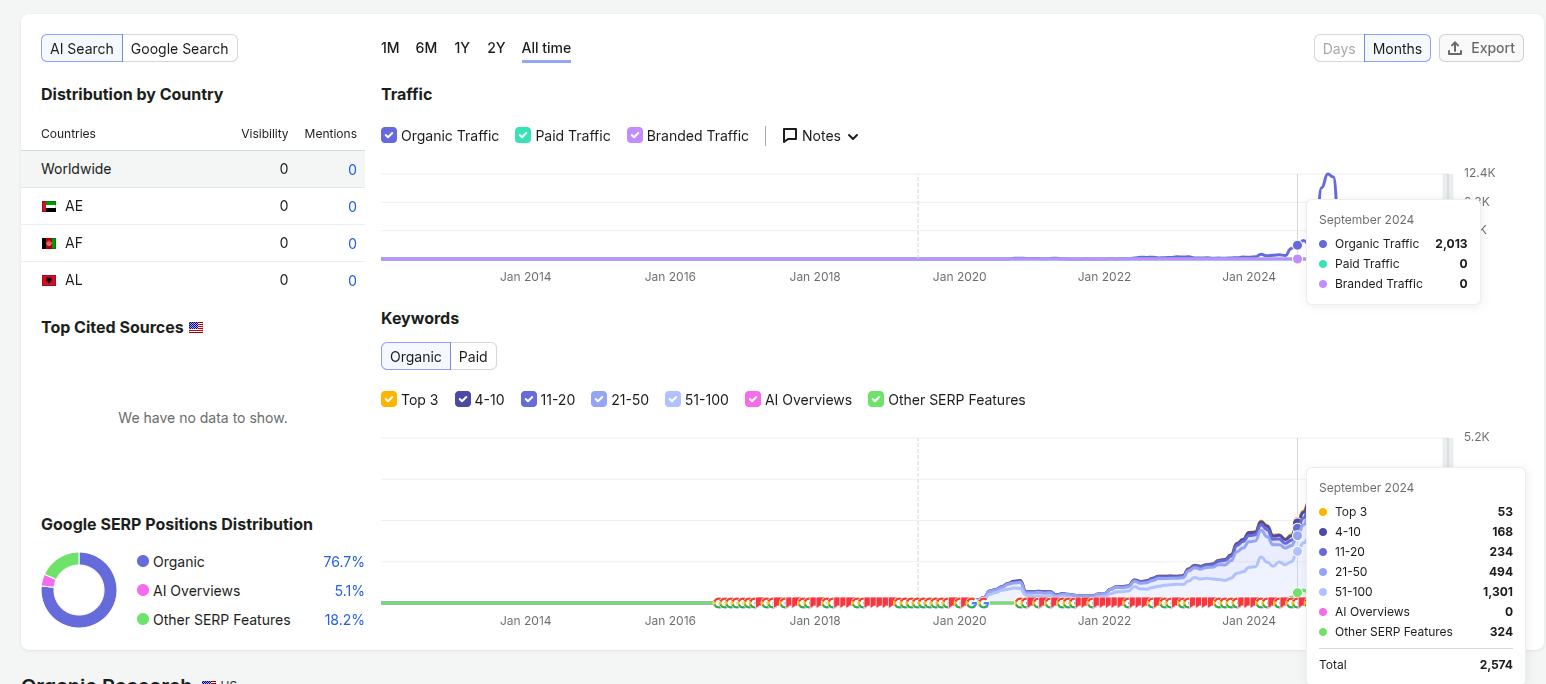
At campaign start, over half of the site’s ranked keywords sat in positions 51-100 (1,301 keywords), with an additional 494 keywords in positions 21-50. Only 53 keywords ranked in the top 3, locking the vast majority of search demand and traffic potential below the fold of Google’s results.
Untapped SERP Features
The domain held 324 SERP feature placements at start, leaving substantial search real estate uncaptured. People Also Ask and visual search features were critically underleveraged for a content-heavy travel blog where direct reader questions should command top SERP placement.
No Branded Search Presence
Branded traffic was recorded at zero throughout the campaign window. All organic sessions came from non-branded discovery queries, meaning the site relied strictly on topical relevance and search authority rather than repeat brand navigation.
Aggregator Competition
Travel content covering emerging and offbeat destinations sits in a query space with high search intent. Massive travel aggregators and global media publishers dominated primary results, requiring a structured, cluster-based content moat to compete.
Our Approach
Destination Depth Over Destination Breadth
Our strategy for The Travel Fugitive was built on one insight: independent travellers searching for off-the-beaten-path destinations want depth, not aggregation. We focused on building content that fully answered destination queries rather than skimming across many locations, structuring each piece to capture the full range of related questions a single destination generates in search.
Keyword Cluster Mapping by Destination
Each target destination was mapped to its full cluster of associated queries, covering planning, safety, transport, accommodation, and experience-type searches. This ensured individual destination pages could rank for multiple related terms rather than a single head keyword, giving the site a wider footprint from fewer URLs.
People Also Ask Optimisation
Destination content was restructured to answer the specific questions surfaced in PAA boxes for target queries, significantly elevating overall SERP feature footprint and capturing readers during critical early trip planning phases.
Image Optimisation for Search Visibility
Destination posts were updated with properly tagged, compressed, and contextually named images to improve image pack eligibility, boosting secondary SERP feature presence from 324 to 617 placements over the campaign period.
Position Band Progression
Existing rankings in the striking distance range (positions 11-50) were prioritized through on-page structural upgrades and internal linking. Positions 21-50 surged from 494 to 1,154 keywords, while positions 11-20 expanded from 234 to 326 keywords as pages advanced up the index.
The Impact
515% Traffic Growth and Over 10,000 Net New Monthly Visitors
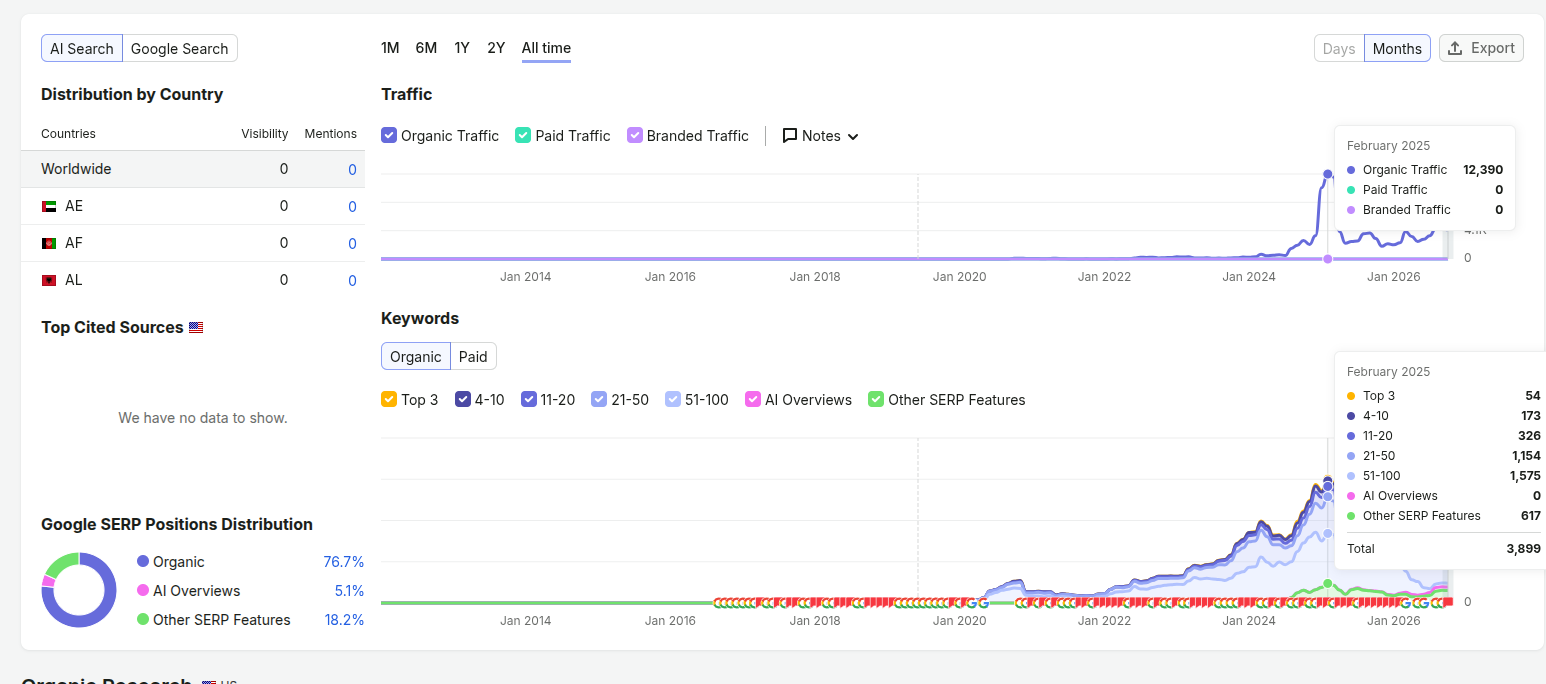
2K → 12.4K
Monthly organic traffic
+515%
Traffic growth
+10,377
Net new visitors/mo
+1,325
New keyword rankings
Rather than spreading thin across hundreds of destinations, the depth-first approach built genuine topical authority around each location the site covers, giving The Travel Fugitive a compounding organic presence that established aggregators cannot easily replicate with templated destination content.
Actionable Insights
What Travel Blogs Can Learn From This Campaign
Depth Beats Destination Volume
A travel blog that thoroughly covers 30 destinations outperforms one that skims 300. Search engines reward content that answers the full range of queries a destination generates, and readers reward it with longer sessions and return visits. Choosing fewer destinations and covering them completely is a more durable strategy than chasing breadth.
SERP Features Unlock Secondary Clicks
For travel content, SERP feature placements and PAA boxes are not secondary signals. Structuring content to capture visual packs and conversational questions nearly doubles a site’s total search real estate beyond traditional blue links alone.
Rankings Below Position 20 Are an Asset
A large cluster of keywords ranking in positions 21-100 represents potential traffic already within reach, not a failure. These pages have proven relevance and need targeted on-page improvements rather than new content. Prioritising position band progression on existing rankings often delivers faster traffic gains than building new pages from zero.
Niche Destinations Carry Lower Competition
Travel content about less-mainstream destinations competes with fewer authoritative sources than content about major hubs. This creates a structural opportunity for independent blogs to rank highly on queries with real search demand but limited high-quality supply. Identifying and prioritising these gaps is more efficient than competing directly with large aggregators on high-volume destination keywords.