
SHOPIFY CASE STUDY
Tata Tea 1868: A Premium Shopify Storefront for India's Heritage Tea Brand
How WebSpero designed and built a luxury Shopify storefront for Tata Tea 1868, with variant-driven collection filtering, custom product card rendering, Adobe DataLayer analytics, and a scalable theme architecture that turns a heritage tea catalog into an editorial brand destination.
Project Context
Client
Tata Tea 1868
Niche
Shopify E-Commerce · Premium Tea
The Tech Stack
- Shopify
- Liquid
- HTML5 / CSS3 / JavaScript
- jQuery
- Shopify Metafields
- JSON-LD Schema
- Adobe DataLayer
"A premium tea brand deserves a storefront that feels as crafted as the blend in the cup."
Tata Tea 1868 came to WebSpero with a heritage catalog, a loyal audience, and a clear ambition: turn the Shopify storefront into a luxury digital experience that does justice to a brand built since 1868. The product was already exceptional. The job was to make the buying experience match.

Brand Lead, Tata Tea 1868
Heritage Premium Tea · India
HOW WE BUILT IT
A Structured, Brand-in-the-Loop Build Process
Tata Tea 1868 came to us with a clear brief: a Shopify storefront that felt premium, editorial, and unmistakably Tata from the first scroll, with a catalog architecture flexible enough to scale across blends, regions, and gifting occasions. Every design decision was validated against the brand identity before development began, and the brand team reviewed each milestone before we moved forward.

DISCOVERY
A working session to understand the brand’s heritage, catalog structure, audience, and what the existing storefront was not doing for the brand or the buyer.

REQUIREMENT ANALYSIS
We mapped the homepage into sections by purpose: brand identity, ritual, provenance, product discovery, social proof, and
editorial. Each section was assigned a clear role before design began.

DESIGN DIRECTION
Defined the visual system: warm cream backgrounds, muted brown accents, editorial typography, and a photography direction rooted in garden-to-cup
storytelling. The design language was agreed before any code was written.

THEME DEVELOPMENT
Built the custom Shopify theme in Liquid: hero, cookbook, freshly-sourced, flavours-of-India grid, variant-aware product cards,brew stories, video
banner, blog, testimonials, and footer.

VARIANT & FILTER LOGIC
Built variant-metafield-driven filtering and custom collection page rendering so flavour, pack size, and blend type filter accurately at the
variant level, not just the product level.

ANALYTICS & INTEGRATIONS
Wired Adobe DataLayer events across the funnel (page view, product view, search, add to cart, begin checkout, purchase) and
integrated reviews and ratings into the theme.

QA & PERFORMANCE
Cross-browser and cross-device testing across all homepage and PDP sections. Lazy loading, image optimization, and asset minification verified
against mobile performance budgets.

LAUNCH
Deployed the theme to tatatea1868.com. Verified all integrations, confirmed variant filters fired correctly, validated every DataLayer event, and handed over
full theme source to the client.
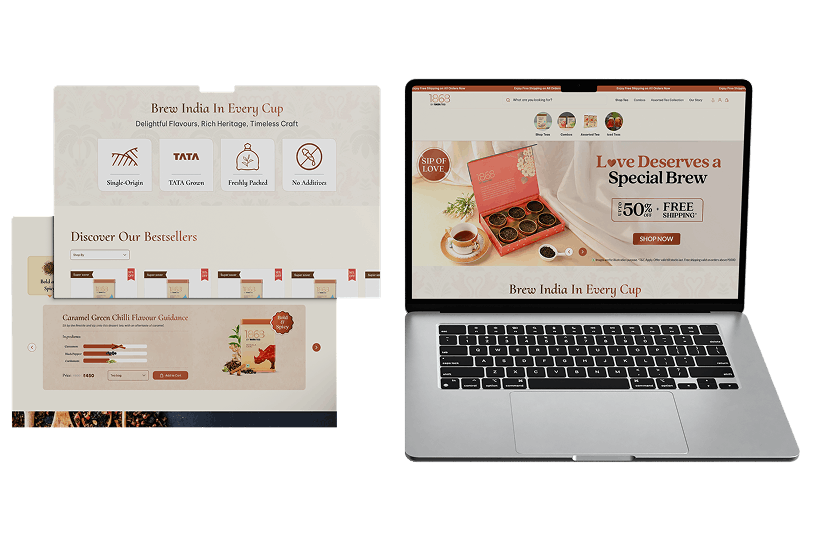
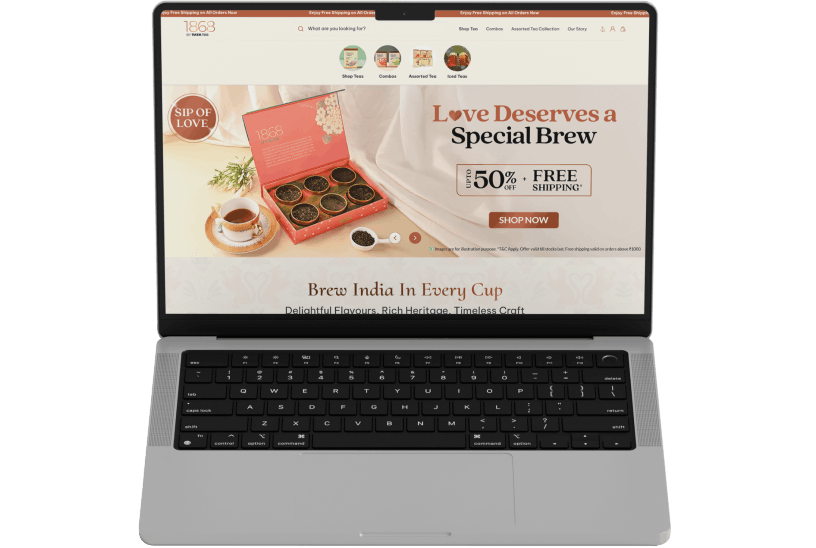
Hero Section: Brand Statement and First Impression
The homepage opens with a full-width hero on a warm cream backdrop, premium tea photography, and a single brand statement. One message, one call to action. The brand identity is established before a visitor has scrolled.
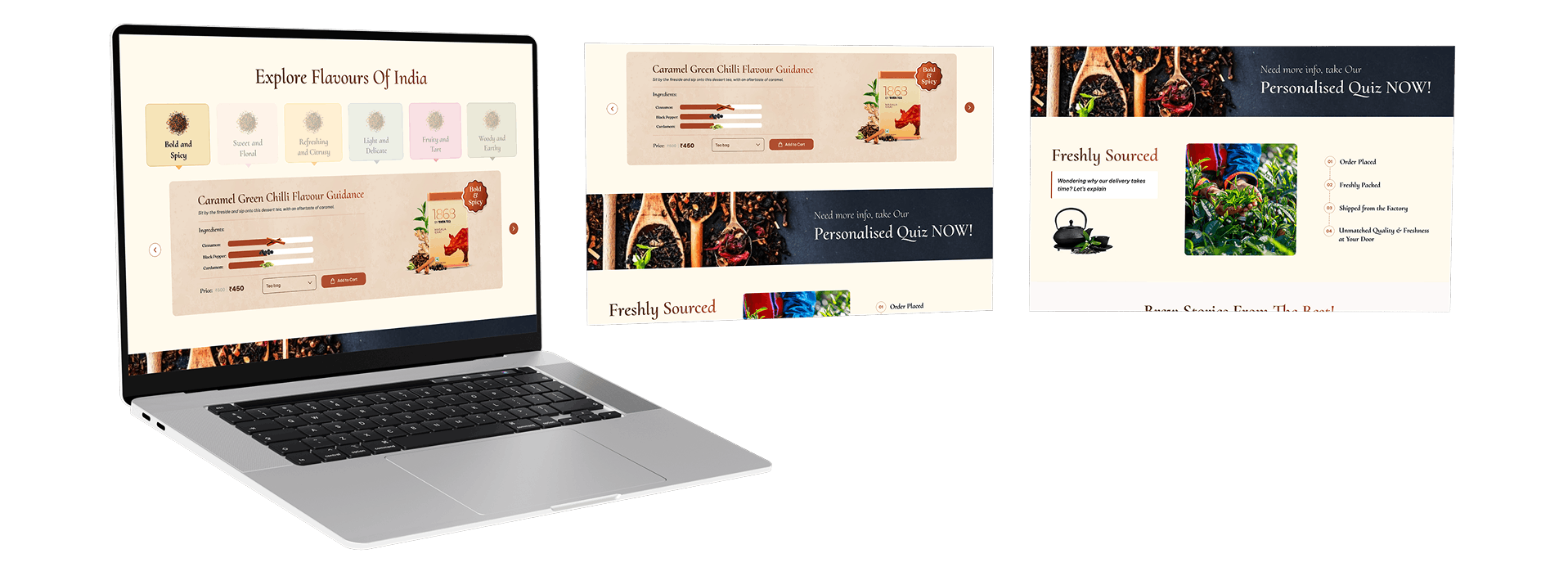
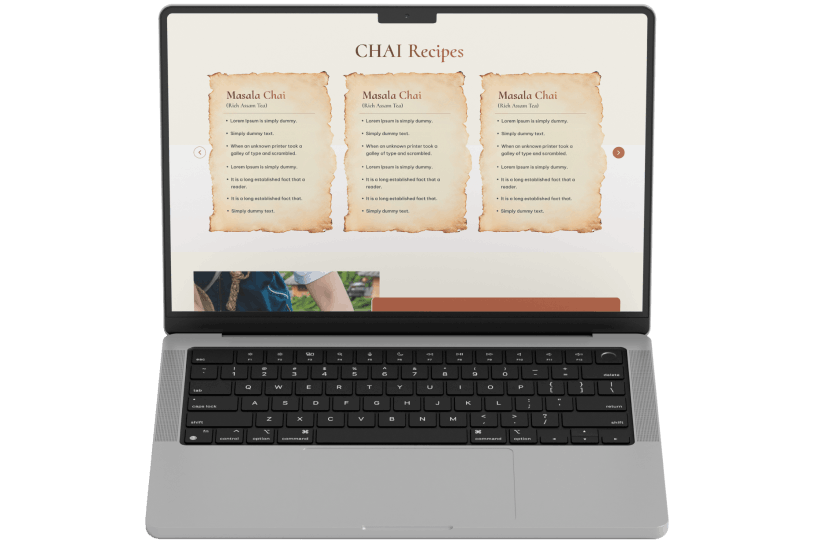
Cookbook: Pairing Tea With the Moment
An editorial cookbook block that pairs each blend with the ritual it belongs to: a morning chai, an afternoon brew, an evening unwind. The section gives the product a context beyond the SKU, which is what a premium catalog needs to feel premium.
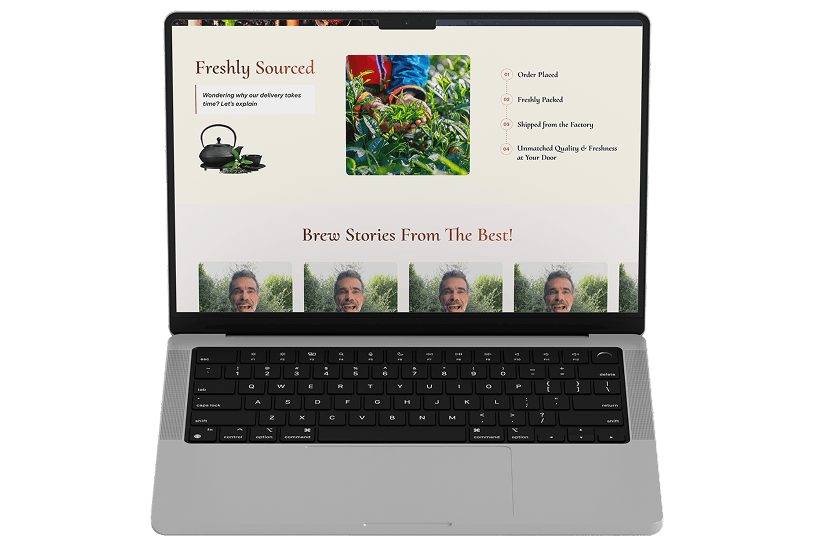
Freshly Sourced: Garden-to-Cup Storytelling
A wide horizontal block on the Tata sourcing story: where the leaves are grown, how they are picked, and how that translates into the cup. For a heritage tea brand, provenance is not marketing copy. It is the product.
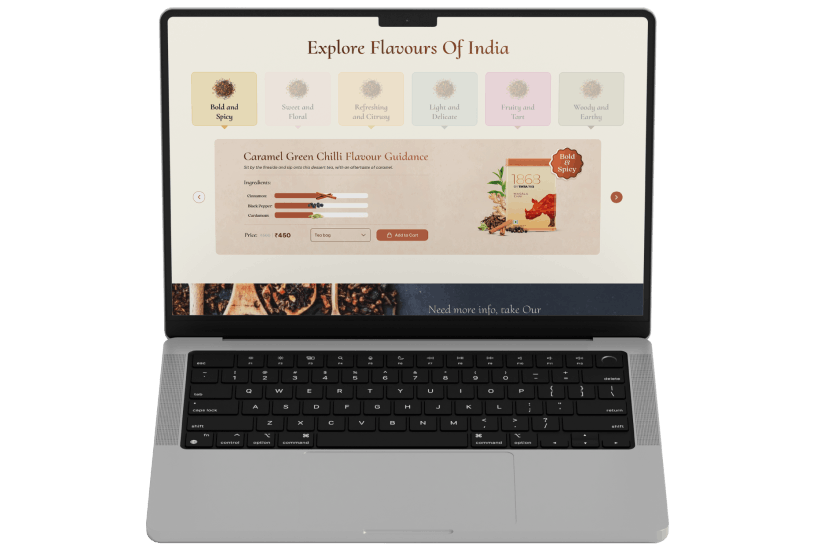
Explore Flavours of India: Collection Grid
A curated grid spanning regional blends with editorial collection cards. Each card is a portal into a flavour family, not just a category link, so a visitor can browse by mood or region rather than scrolling a flat product list.
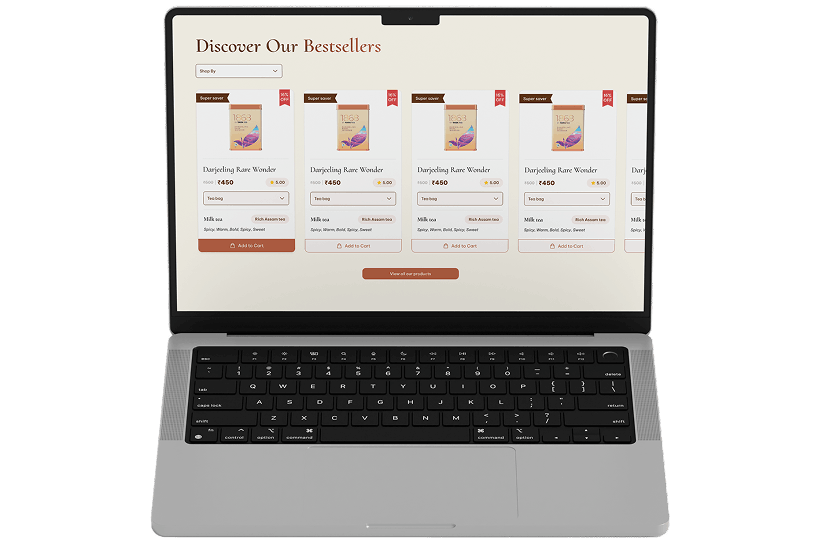
Variant-Aware Product Cards
Custom collection page logic renders product cards from variant data, not just product data. Flavour, pack size, and blend type are surfaced on the card itself, so a buyer can find the right SKU without clicking into every product. This is the core of the variant-driven shopping experience.
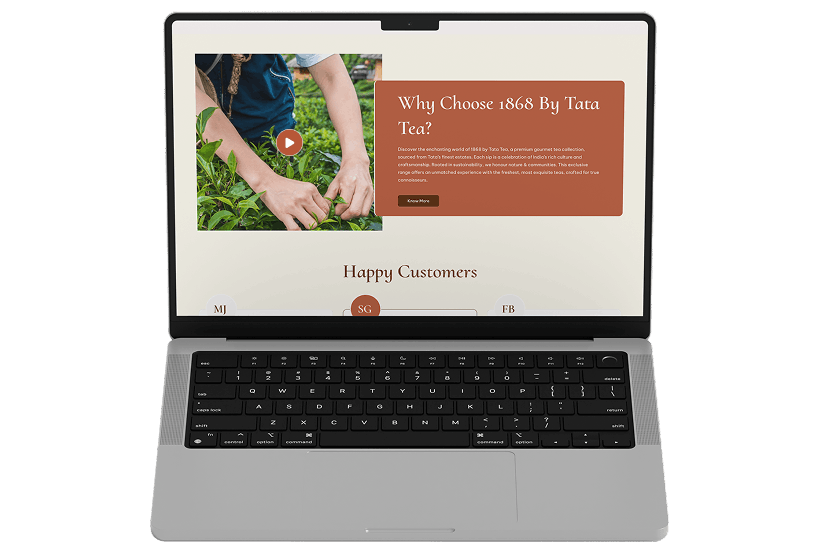
Video Banner: A Brand Moment in Motion
A full-width video banner with a soft dark overlay carries the brand’s atmosphere in motion. It is the one section on the page where the brand stops selling and starts feeling. Video is served lazily so it never blocks the rest of the page.
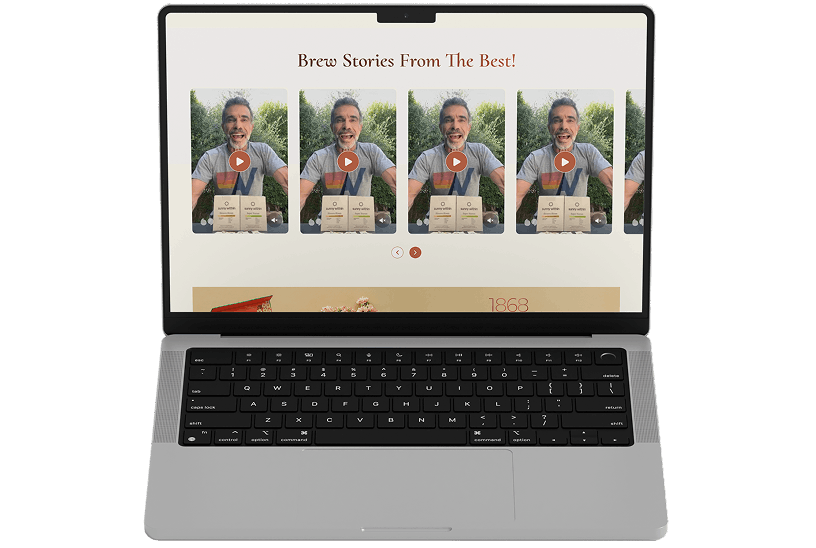
Brew Stories: Editorial Content
A three-card editorial block linking to long-form articles on tea, ritual, and origin. Editorial content signals expertise and keeps the brand relevant between purchases, with a layout that scales as new posts are added.
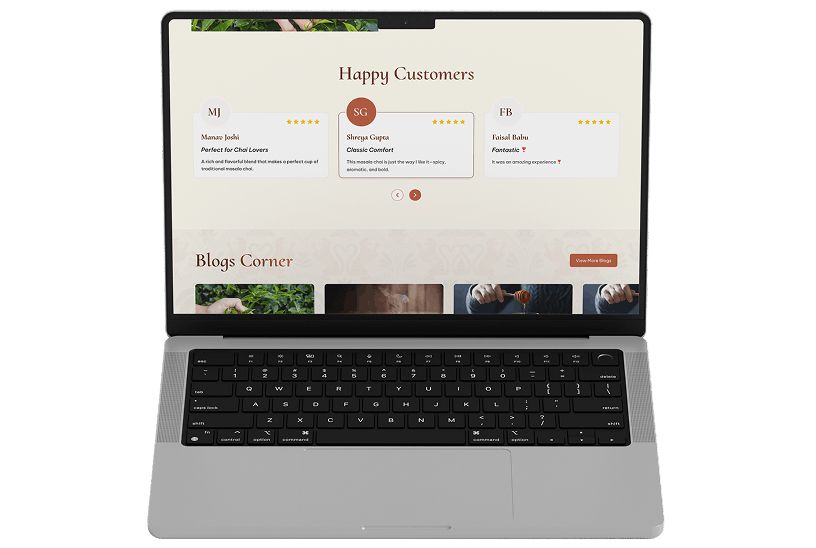
Testimonials: Customer Voices
A carousel of verified buyer reviews with star ratings and customer attribution. Real voices, real ratings, displayed inside the theme rather than served from a third-party widget that adds page weight.
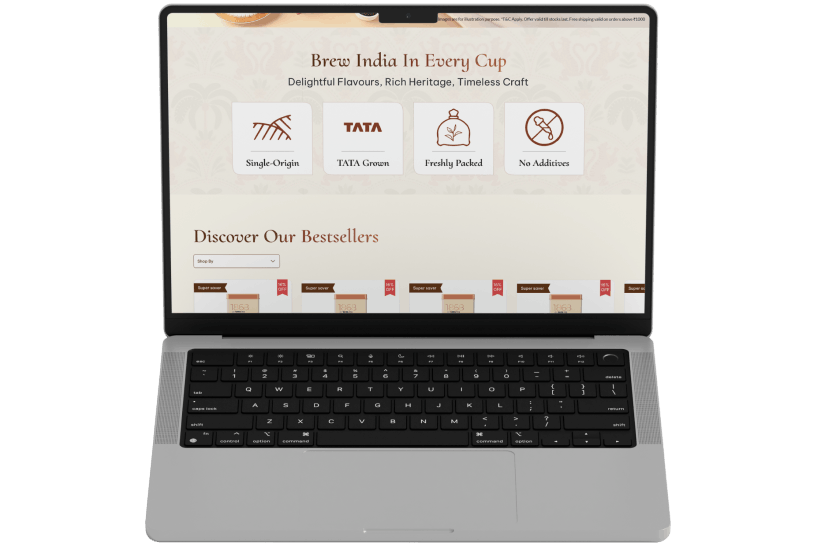
Brew India: Closing Brand Statement
A wide, image-led closing block that returns the visitor to the brand promise: tea grown, picked, and packed in India. It is the final visual breath before the footer, reinforcing the heritage story without another product pitch.
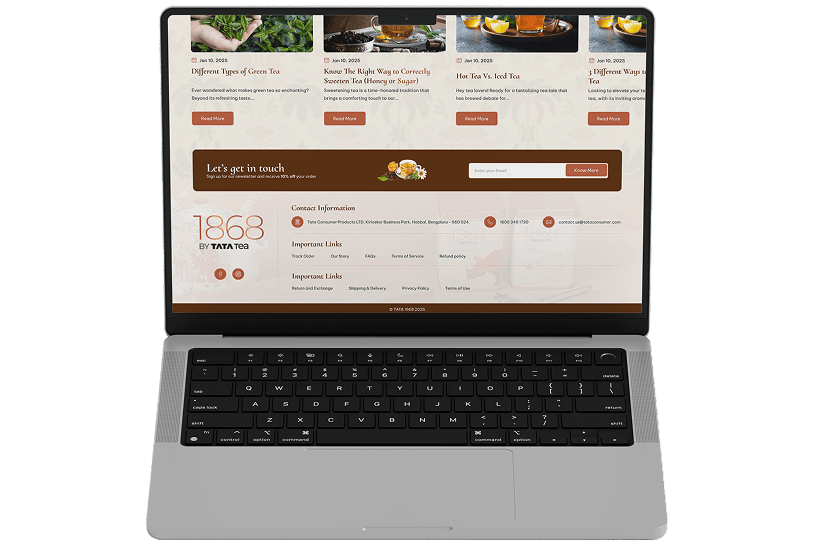
Footer: Trust Signals and Navigation
A structured footer carries the brand close: organised links across About, Products, Customer Service, a newsletter signup, social links, and the brand story line. The footer is the last touchpoint before checkout, and it is treated like one.
WHAT TO EXPECT FROM US
Transparent Build Process and Clean Delivery for Shopify Projects
If you are building or rebuilding a Shopify store and weighing agencies, here is what working with our team actually looks like.

A plan before a proposal.
We start with a working session to understand what your store needs to do, who it serves, and where the gaps are. For a brand store, that means understanding the brand identity, not just the feature list. You leave with a delivery plan, not a sales pitch.

Brand-first, not feature-first.
Every section of your homepage exists for a reason. We agree on the purpose of each section before we design it. The end product reflects your brand’s actual logic, not a template someone built for a different business.

Clean theme code from the start.
We write Shopify Liquid that any competent developer can read and maintain. No third-party app dependency for functionality that belongs in the theme. No workarounds that break on the next Shopify update.

One team from design to launch.
The same team that designs your theme builds it and tests it. There is no handoff between a design agency and a development shop. When the design changes, the developer who built it makes the change.

A milestone review at every stage.
You review the actual work at each stage: design direction, theme in staging, integrations live, final QA. You always know what has been built and what is left. No month-long silences followed by a reveal.

Quality that does not depend on one person.
Every change is tested before it reaches you. Every section is reviewed across browsers and devices, not just on one screen. Nothing ships because one developer said it looked fine on their machine.

You own what we build.
At handover you get the full theme: Shopify Liquid source files, all custom CSS and JavaScript, and documentation. Your team can take it forward independently or keep us on; that is your choice.

A founder-friendly working rhythm.
You review every milestone. The brief you gave us, the thing that makes your store feel like your brand and not a template, is what we build to. You are not a ticket number.