
SEO CASE STUDY
125% More Organic Clicks for a 3D Bible Maps Publisher
How Casual English Bible more than doubled its organic clicks in five months, growing from 4,000 to 9,000 per four weeks as Bible readers searched for maps of the places they study.
Client
Casual English Bible
Niche
3D Bible Maps & Bible Study Resources
Duration
5-Month Campaign
+125%
Organic clicks
+125%
Organic clicks
9,190
Clicks per 4 weeks
+95%
Search impressions
The Client
Casual English Bible: Scripture Brought to Life in 3D Maps
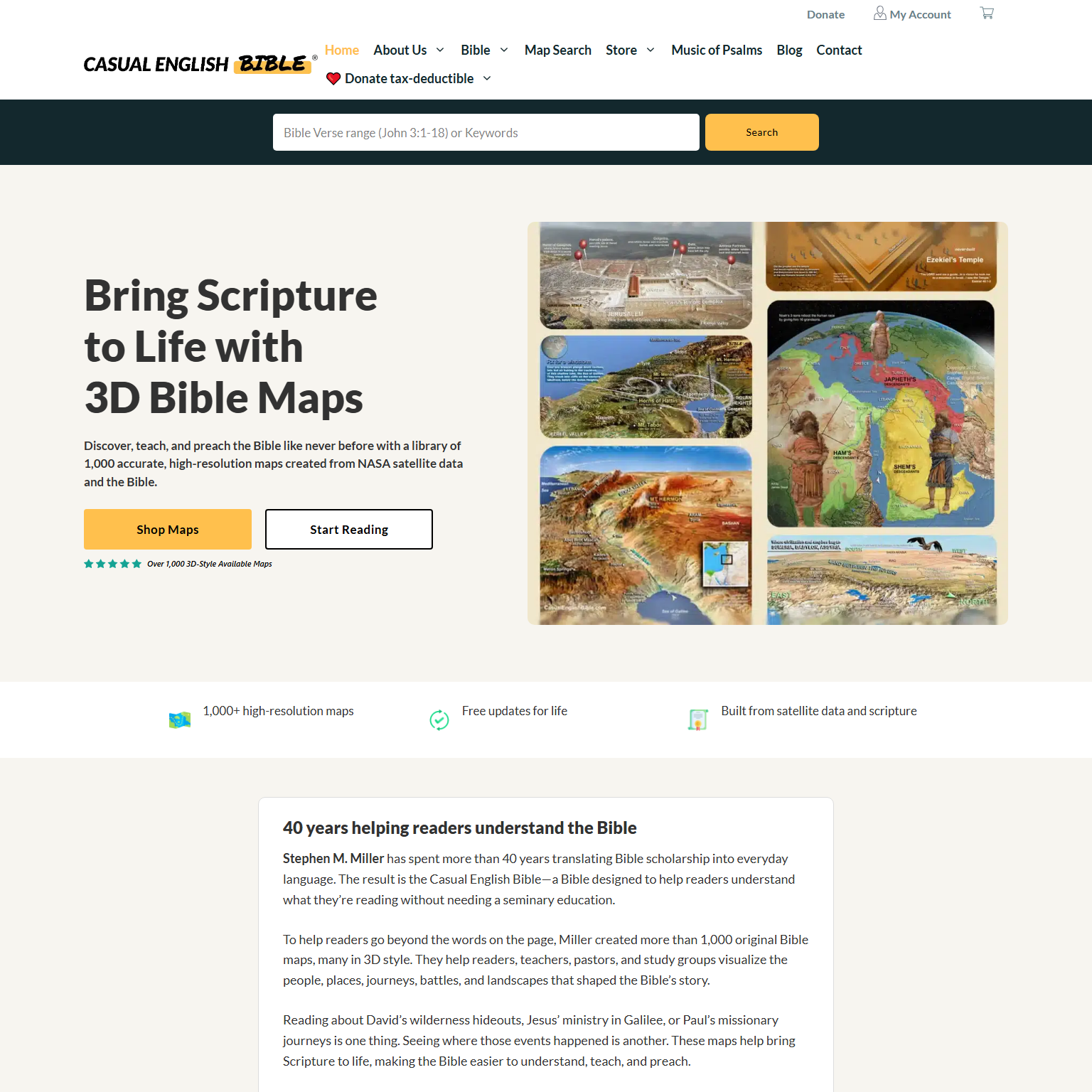
Casual English Bible is a specialized digital publisher focused on high-resolution 3D Bible maps offered as downloadable PDFs. Created using satellite terrain data and biblical text, the brand provides visual cartography that illustrates the geographical landscapes behind specific scripture passages and historical journeys.
The publisher serves as a study resource for pastors, educators, small group leaders, and individual readers. Founded by an experienced Bible writer, the brand organizes its maps chronologically and by biblical chapter, allowing users to easily locate, study, and visualize specific places, routes, and scripture contexts.
THE CHALLENGE
A Large Library of Maps Waiting to Be Found

Search Demand Starts With a Place or Passage
Readers rarely search for 3D Bible maps by name. They search for the journey of Paul, the route of the Exodus or a map of Jerusalem, so the store needed pages matching those exact places and passages.
A Library Too Large to Browse
With more than 1,000 maps, buyers who arrived on the homepage had to dig to find the one they wanted. Search engines faced the same problem, with few clear pages for individual Bible books and journeys.
Free Map Sites and Study Platforms
Many free map images and large Bible study platforms rank for place searches. A paid download had to show clear value, such as accuracy, detail and print quality, to earn the click over a free alternative.
Little Text Around Visual Products
Maps are visual, and product pages carried little written context. Without descriptions of the places, events and passages each map covers, Google had few signals about what the pages offered to readers.
Our Approach
Passage-Based Architecture + Descriptive Map Pages
Our strategy for Casual English Bible was built on one insight: readers look for the place or journey they are studying, not for a product. We organised the library around books, journeys and locations so every common study search had a matching page.
Book and Journey Collections
Maps were grouped into collections by Bible book, journey and region, giving search engines and readers clear pages for searches such as Paul’s missionary journeys or maps of Genesis.
Descriptive Map Pages
Each key map page gained text describing the place, the events and the passages it covers, so Google could match the page to the questions readers ask while studying.
Image and File Optimisation
Map preview images were given descriptive file names and alt text, helping the maps appear in Google Images, where many people look for Bible map visuals first.
Study Content Linked to Downloads
Supporting articles about places and journeys linked directly to the matching map downloads, turning study research into product page visits and downloads.
The Impact
Organic Clicks More Than Doubled in Five Months
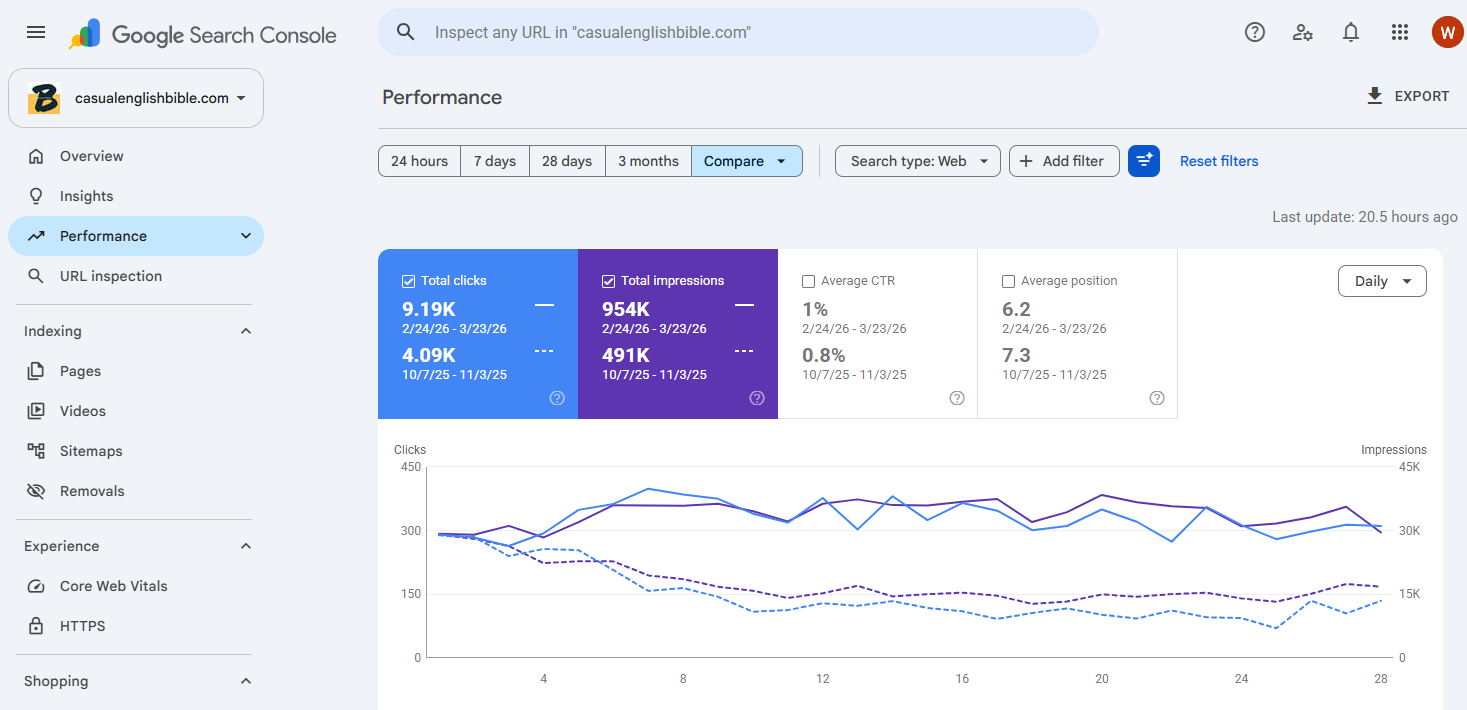
4,092 → 9,190
Organic clicks per 4 weeks
+125%
Click growth
490.7K → 954.4K
Search impressions
Comparing the first four weeks of the campaign (7 October to 3 November 2025) with the last four weeks (24 February to 23 March 2026), Casual English Bible’s organic clicks rose from 4,092 to 9,190 per four weeks, and search impressions almost doubled from 490,000 to 954,000. Bible readers searching for places and journeys were now finding the matching maps directly from Google.
Actionable Insights
What Educational and Digital Product Publishers Can Learn
Organise Around What People Study
Learners search for the topic in front of them, not for a product format. Grouping products by subject, book or topic gives each common search a clear and relevant landing page.
Visual Products Need Words
Search engines read text, not images. Short descriptions of what each visual product shows let Google match it to the questions people ask and the topics they research.
Show Why Paid Beats Free
When free alternatives exist, product pages must make the difference obvious. Accuracy, detail and print quality are the reasons buyers choose a paid resource over a free one.
Link Learning Content to Products
Articles that answer study questions build trust and bring in readers. Linking them to the matching downloads turns that trust into purchases instead of a dead end.