
Digital Marketing Updates (August 10-14, 2026): AI Brand Citations, Franchise Listings, and Claude’s Watermark
 Webspero Content Team
Published: August 17
Webspero Content Team
Published: August 17
Webspero Content Team
Published: August 17
Webspero Content Team
Published: August 17
This week: AI systems are building brand answers mostly from reviews and forums rather than your website, outdated franchise listings are feeding wrong information to local search tools, AI-built sites often show Google an empty page, six months of neglect can cost years of search rankings, and Claude now embeds a watermark that survives a rewrite.
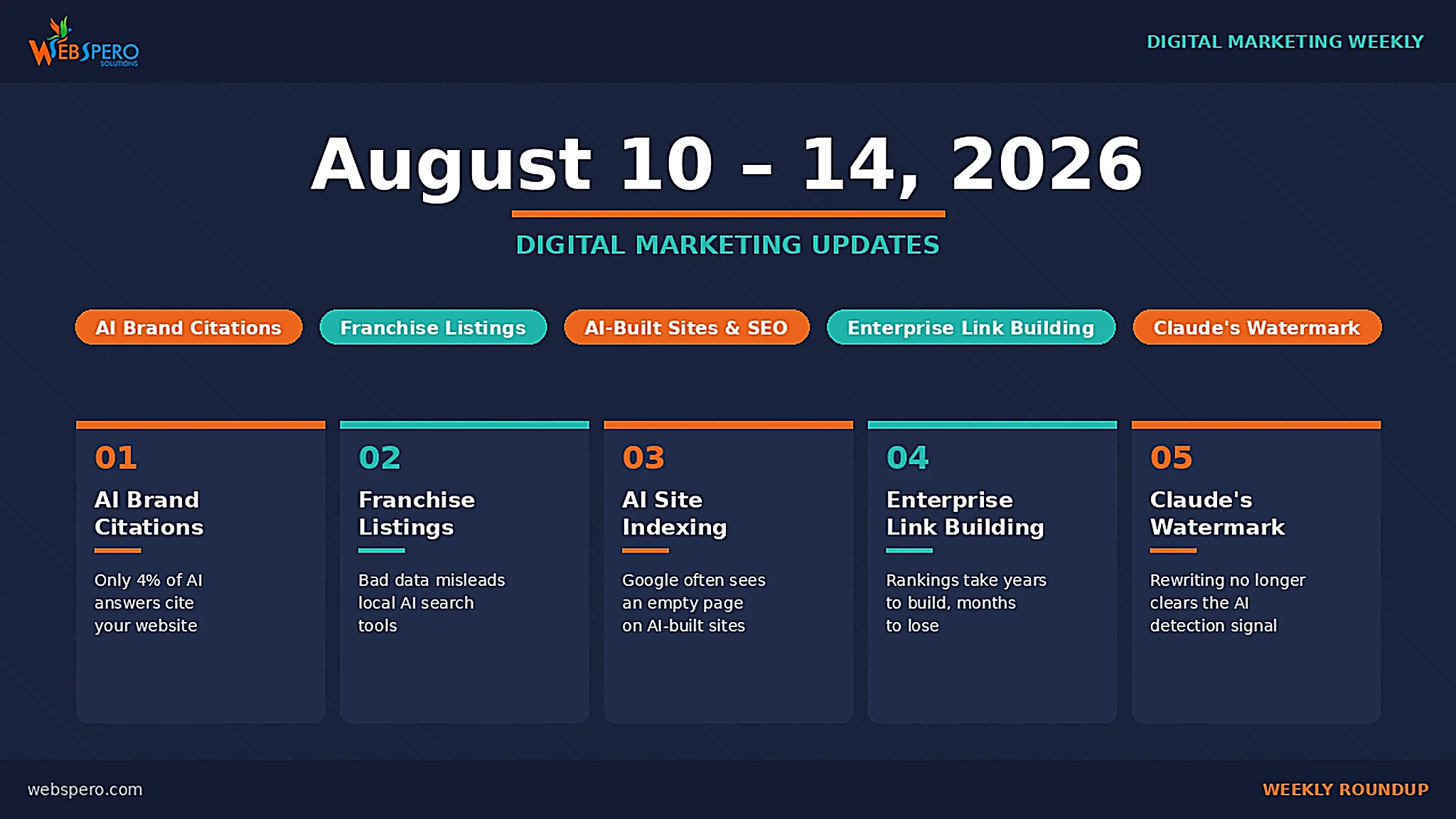 Here’s everything that happened this week and what marketers can do about it.
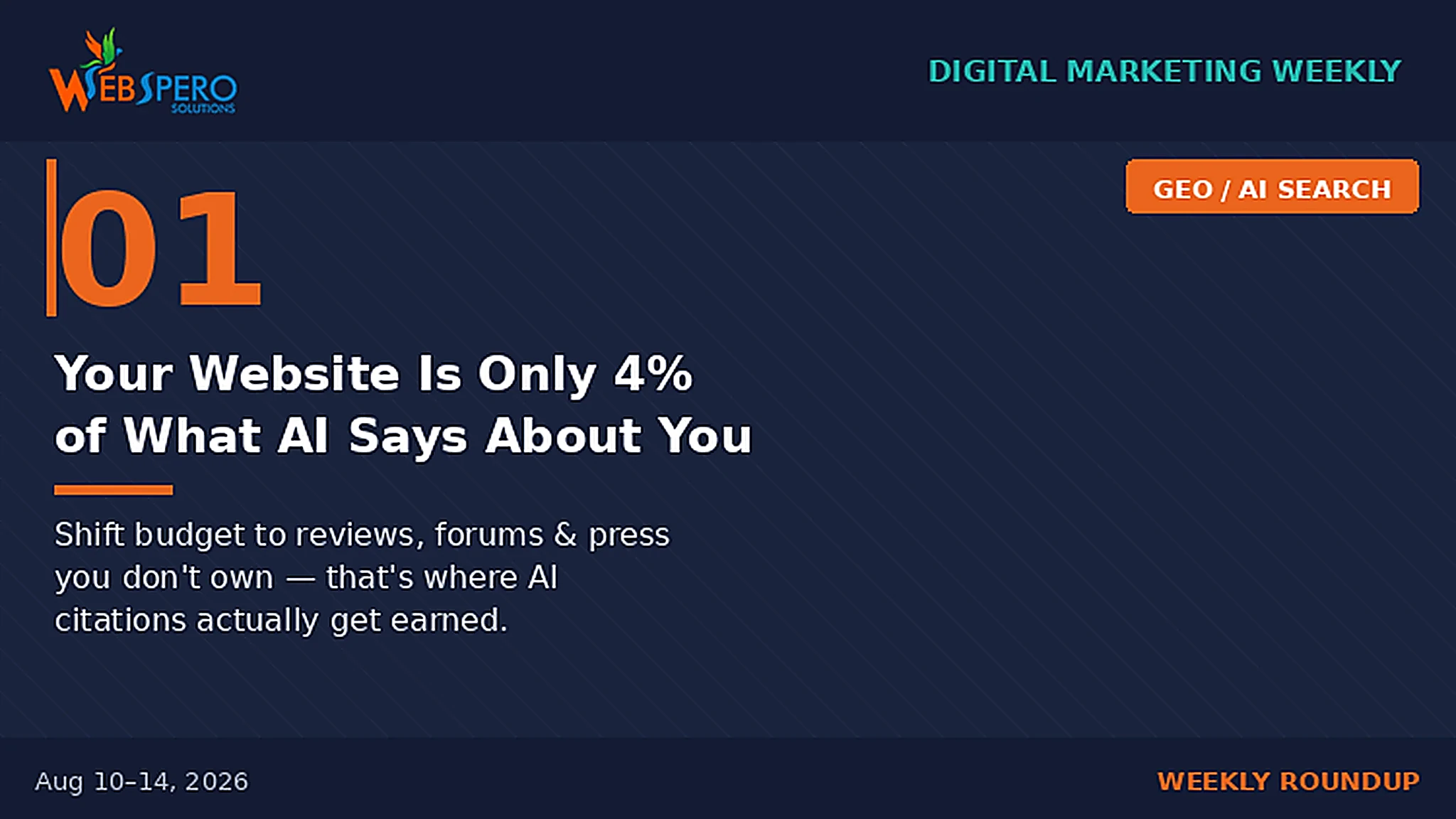
New data published this week puts a specific number on how much AI systems actually cite brand websites when generating answers: roughly 4%. The rest comes from review platforms, forums, press coverage, and third-party directories.
When someone asks an AI assistant about your business, the answer is built almost entirely from sources you do not own. Reviews, Reddit threads, editorial mentions, and directory listings carry far more weight in that answer than your homepage does.
The practical shift here is clear: budget and effort that have historically gone into owned content need to move toward earning presence in the external channels AI actually reads. Review generation, PR, and community participation are no longer supplementary. They are where GEO citations get built.
| KEY TAKEAWAY
Your website controls 4% of what AI says about you. Shift real budget toward reviews, forums, and press you do not own, because that is where the citation actually gets earned. |
Source: As SEO Appeal Dwindles, Brands Battle for Chatbot Attention — RS Web Sols
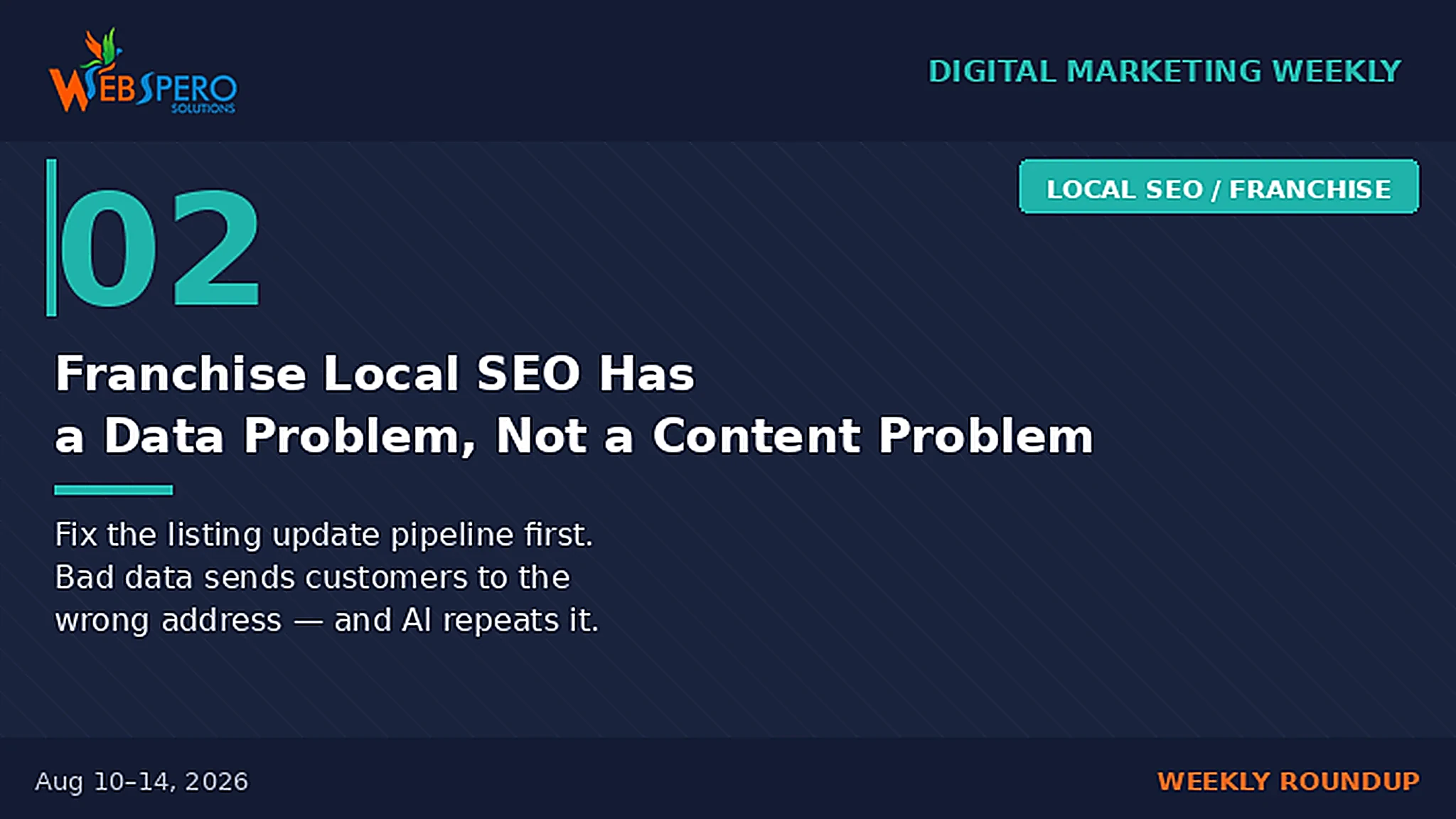
A piece published this week identifies why local SEO programmes at franchise scale keep underperforming: the root cause is usually operational, not creative. Hours change, addresses change, services change, and the update pipeline to correct listings across every platform either does not exist or runs too slowly.
AI-powered local discovery tools pull directly from listing data. When that data is wrong, the AI sends customers to the wrong address or quotes outdated hours. More content and better copy cannot fix that.
The recommendation is to get the data pipeline working correctly before adding any optimization layer on top. Clean listings are what make local SEO work worth doing at scale.
| KEY TAKEAWAY
Every uncorrected listing is actively misleading the AI tools recommending your locations. Fix the update pipeline first, then optimize. |
Source: Top 5 Local SEO Tools for Franchise Businesses in 2026 — Technology.org
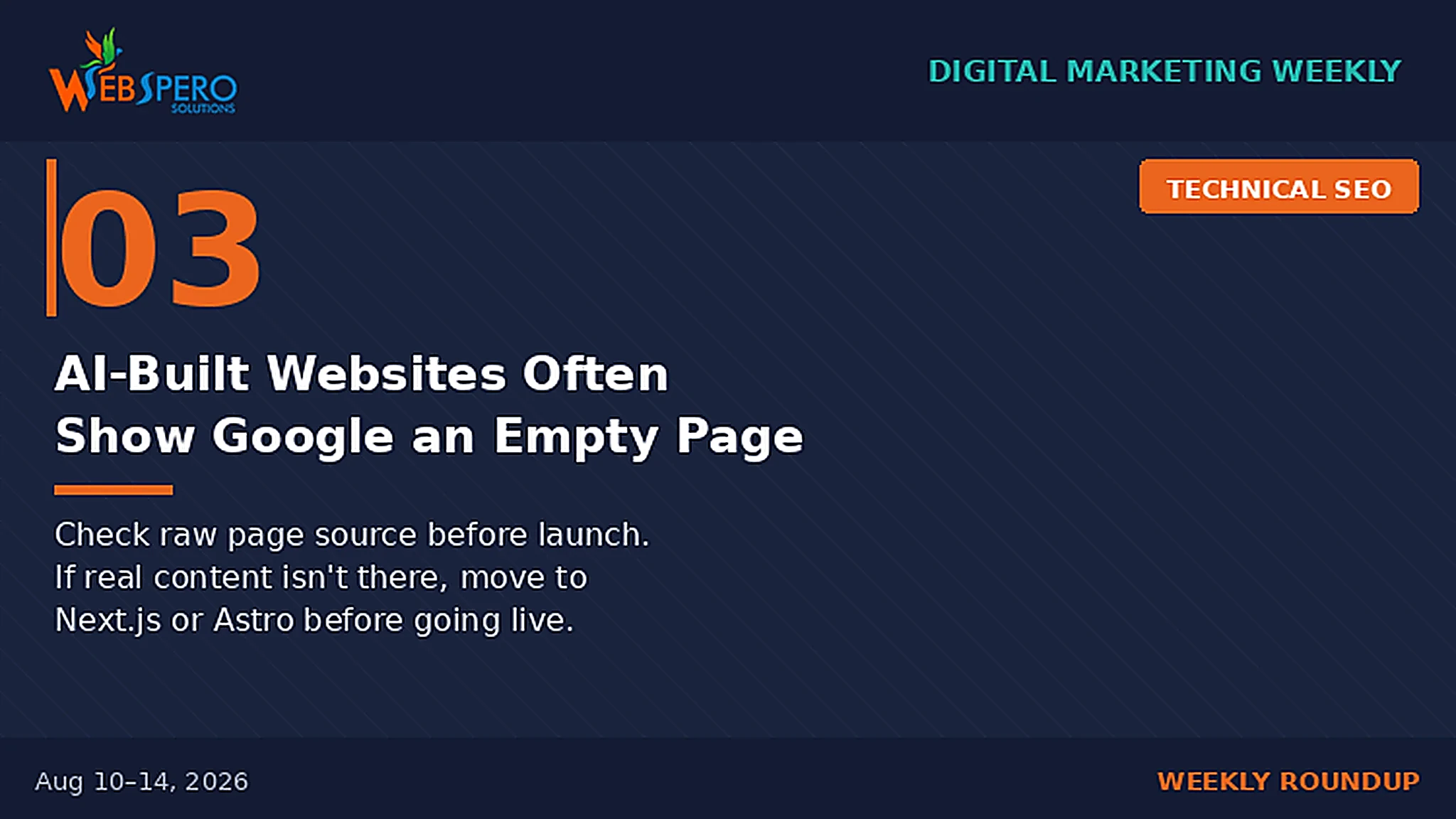
A technical breakdown published this week explains a problem affecting many sites built with AI tools: the page looks complete in a browser but the actual content never makes it into the HTML that Google reads.
Most AI site builders render content dynamically through JavaScript. Google’s crawler does not always run JavaScript the same way a browser does, so it often sees a near-empty shell. The text, headings, and copy that should earn rankings simply are not there when the crawler visits.
The fix is checking the raw page source before launch and switching to a framework that handles server-side rendering, such as Next.js or Astro, if the content is missing. Sites that make that switch typically get indexed in days. Sites that do not can wait months.
| KEY TAKEAWAY
View your page source before launch and confirm your real content is there. If it is not, move to a server-side rendering framework. You will get indexed in days rather than waiting months. |
Source: Your AI-Generated Website Is Failing at SEO. Here’s Why — HackerNoon
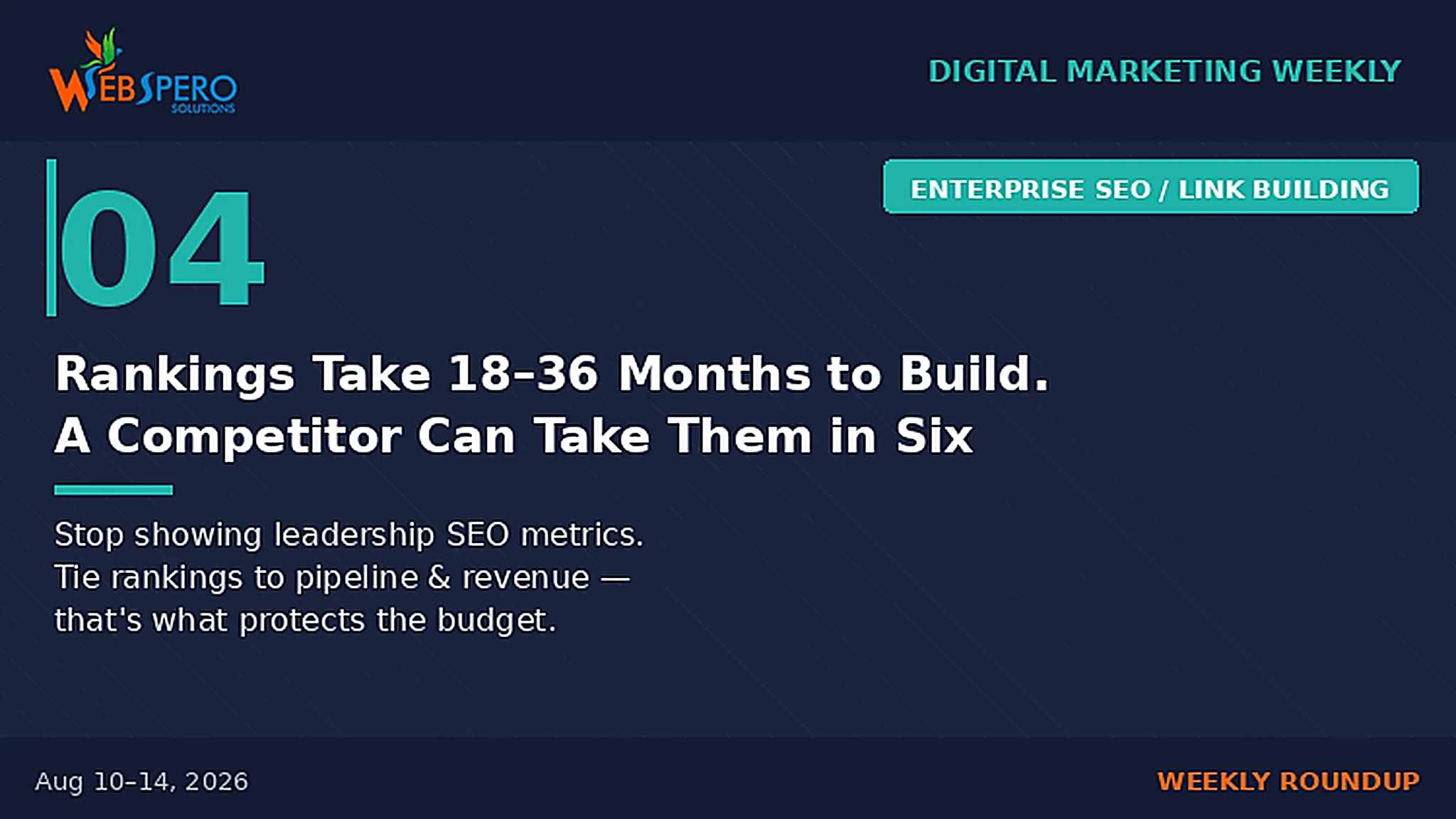
A piece in CEO World this week makes the asymmetry of enterprise SEO investment very clear. Building strong search rankings takes 18 to 36 months of consistent work. Losing them to a competitor running a focused programme takes 6 to 12 months.
The reason SEO budgets keep getting cut is largely a reporting problem. Showing leadership rankings data and domain authority scores does not land. Connecting those rankings to pipeline and revenue does.
The ask to leadership needs to be framed around what the rankings are worth, what it costs to lose them, and which competitor is quietly closing the gap. That is what gets the link-building budget protected before the damage is already done.
| KEY TAKEAWAY
Stop showing leadership SEO metrics. Show them the pipeline and revenue tied to those rankings. That is how you get the budget before a competitor quietly takes the positions you spent years building. |
Source: The Hidden Cost of Ignoring SEO Link Building at the Enterprise Level — CEO World
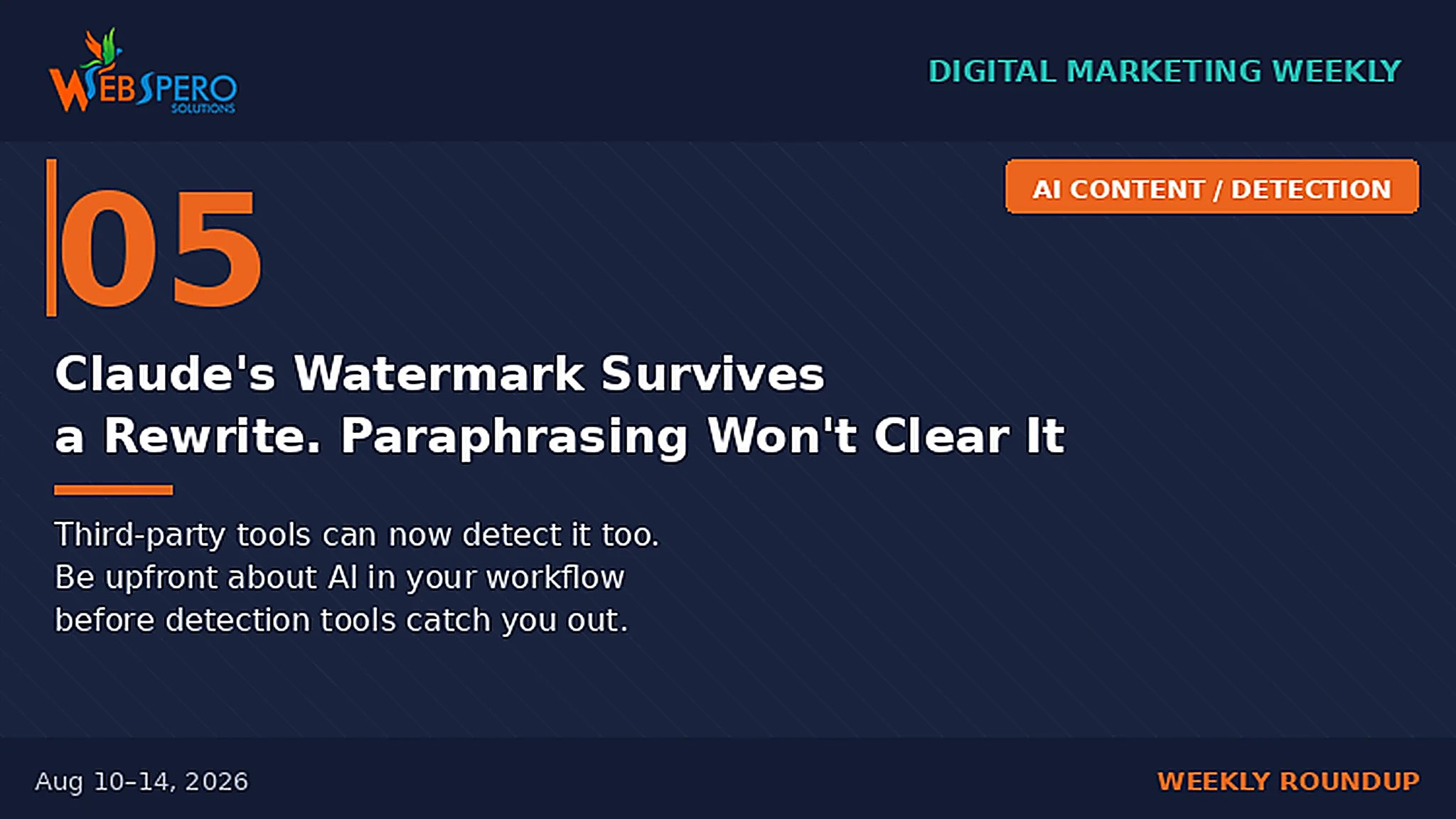
Anthropic confirmed this week that Claude embeds a hidden watermark in the text it generates, and that it persists through significant editing and paraphrasing. It is not visible to the reader. It is built into how the text is structured.
The wider development is that third-party detection tools are now beginning to access the same watermark signal, so detection is no longer limited to Anthropic’s own systems.
Content workflows that rely on a quick rewrite to pass AI output as human-written are now in a detectable window. For teams running content production at scale, the practical response is to be clear about where AI sits in the process and make sure the human editorial layer is doing real work, not just surface-level changes.
| KEY TAKEAWAY
A quick rewrite no longer removes Claude’s watermark, and outside tools can now detect it too. Be upfront about AI in your workflow before detection tools catch you out. |
Source: Why Anthropic’s Claude Watermark May Be a New Text Marking Method — Search Engine Journal
We publish a weekly roundup of the most important updates in SEO, paid search, content strategy, and AI-driven marketing — every week, no noise.
Attention: WebSpero does not conduct business or interviews over Skype, Google Hangouts, DM or any chat platforms and do not request banking information.