
SEO CASE STUDY
433% Organic Growth for a US Disability Law Firm
How Nationwide Disability Representatives captured urgent, high-intent SSDI queries — multiplying monthly traffic more than 5× to reach vulnerable Americans exactly when they need help.
Client
Nationwide Disability Representatives
Niche
Disability & Injury Law Firm
+2.9K
Net new sessions/mo
+433%
Traffic growth
3.5K
Monthly visitors
+2.9K
Net new sessions/mo
+1.5K
New keywords ranked
The Client
Nationwide Disability Representatives: Expert Guidance for Complex SSDI Claims
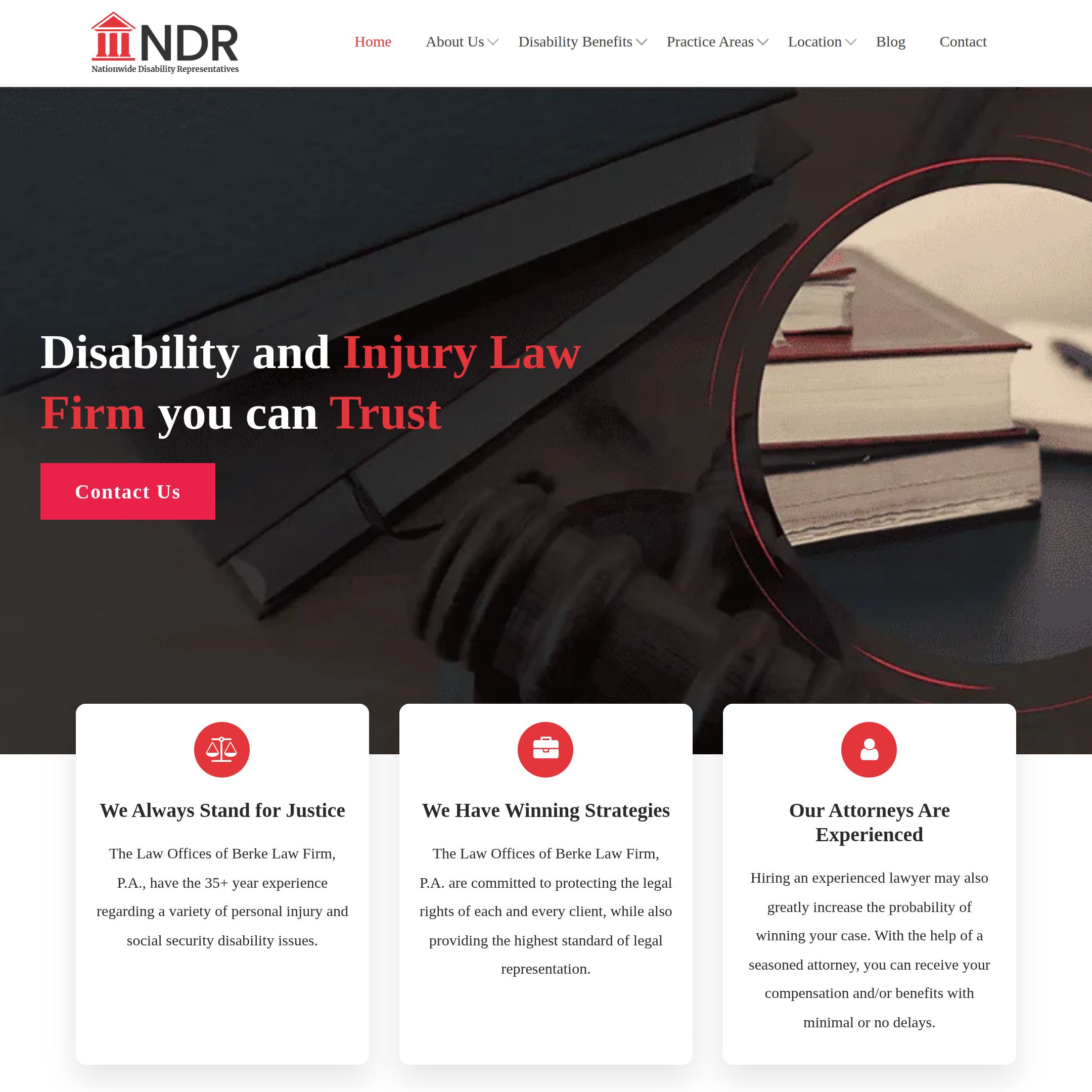
A dedicated US-based disability representation firm helping Americans navigate the complex, emotionally taxing Social Security disability benefits process. Specialising in SSDI applications, denials, and appeals, they provide expert advocacy for individuals facing severe medical, neurological, and mental health conditions. By simplifying a notoriously bureaucratic system, they connect individuals in urgent financial and medical need with the qualified legal representation required to secure their benefits.
THE CHALLENGE
Legal SEO Demands Strict YMYL Compliance and Hyper-Specific Intent Mapping

Missing the Crisis Moments
The site was failing to capture high-intent, urgent searches from denied applicants — the exact moment when legal representation transitions from an option to an absolute necessity.
The E-E-A-T Trust Barrier
Google subjects legal and financial queries to strict YMYL (Your Money or Your Life) standards. Ranking requires demonstrating profound expertise, process transparency, and authentic authority.
State and Condition Gaps
The SSDI landscape varies heavily by medical condition and location. A lack of geo-specific and condition-specific content left massive volumes of qualified, long-tail traffic on the table.
Outdated Referral Assumptions
The firm historically relied on community and healthcare referrals, underestimating the volume of isolated, underinsured applicants who turn directly to Google at 2 AM after receiving a denial letter.
Our Approach
Lifecycle Content Architecture + YMYL Authority Signaling
Our strategy for Nationwide Disability Representatives was built on one insight: SSDI denial doesn’t send people to a referral network — it sends them to Google at 2 AM looking for answers. We focused on building a presence at exactly that moment, across every condition, every state, and every stage of the appeals process where representation becomes urgent.
Denial and Appeals Targeting
We aggressively targeted urgent, high-intent searches like “how to appeal SSDI denial.” Content was structured to answer immediate procedural questions while clearly positioning the firm’s representation services as the most viable path to a successful appeal.
Condition and State-Level Architecture
The site was expanded with dedicated content hubs for specific medical conditions (mental health, musculoskeletal) and high-volume states. This matched the highly specific long-tail queries of users evaluating whether their unique situation qualified for representation.
E-E-A-T and Technical Accessibility
We elevated trust signals by integrating professional credentials, clear success metrics, and process transparency into every page. Simultaneously, technical and accessibility blockers were resolved to ensure seamless access for users who may have physical or cognitive limitations.
The Impact
More Than 5× Traffic Growth, Reaching Applicants at Their Highest Point of Need
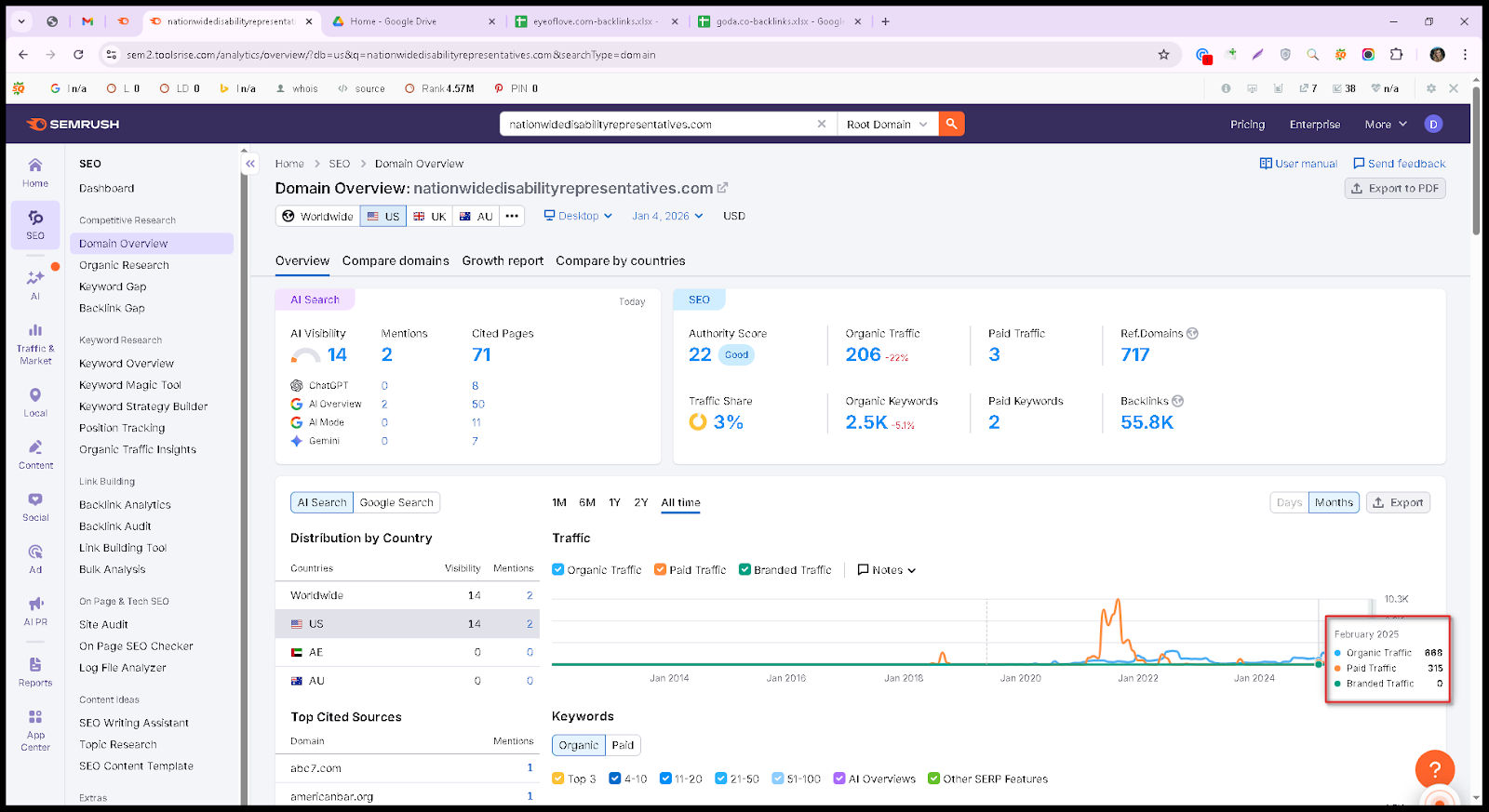
668 → 3.5K
Monthly Organic Traffic
+433%
Traffic Growth
+2,895
Net new visitors/mo
+1,547
New keyword rankings
“By establishing organic authority across the full disability benefits lifecycle, the firm transitioned from relying strictly on traditional referrals to capturing high-value inquiries at the exact moment of urgent need.”
Actionable Insights
What Legal and Representation Firms Can Learn From This Campaign
Target the Point of Failure
In legal services, the highest-intent searches happen when a process breaks down. Content targeting “denied claims” or “appeals” converts at vastly higher rates than general informational content.
Specificity Equals Authority
Users don’t search for “disability lawyers” as often as they search for “fibromyalgia disability qualification.” Building condition-specific architecture captures less competitive, highly qualified traffic.
YMYL Demands Real Credentials
Google heavily penalizes legal sites lacking clear Expertise, Experience, Authoritativeness, and Trust (E-E-A-T). Process transparency, author credentials, and structured data are non-negotiable ranking factors.
Organic Is the New Referral
The assumption that clients only come through healthcare or community referrals is outdated. A robust organic presence reaches isolated applicants who have nowhere else to turn but search engines.