
Digital Marketing This Week: Google, AI, And The Moves That Actually Matter
 Webspero Content Team
Updated: May 18
Webspero Content Team
Updated: May 18
Webspero Content Team
Updated: May 18
Webspero Content Team
Updated: May 18
Google quietly removed a feature millions of pages depended on. AI ad agents are making expensive mistakes. And SEO recommendations keep dying before they ship.
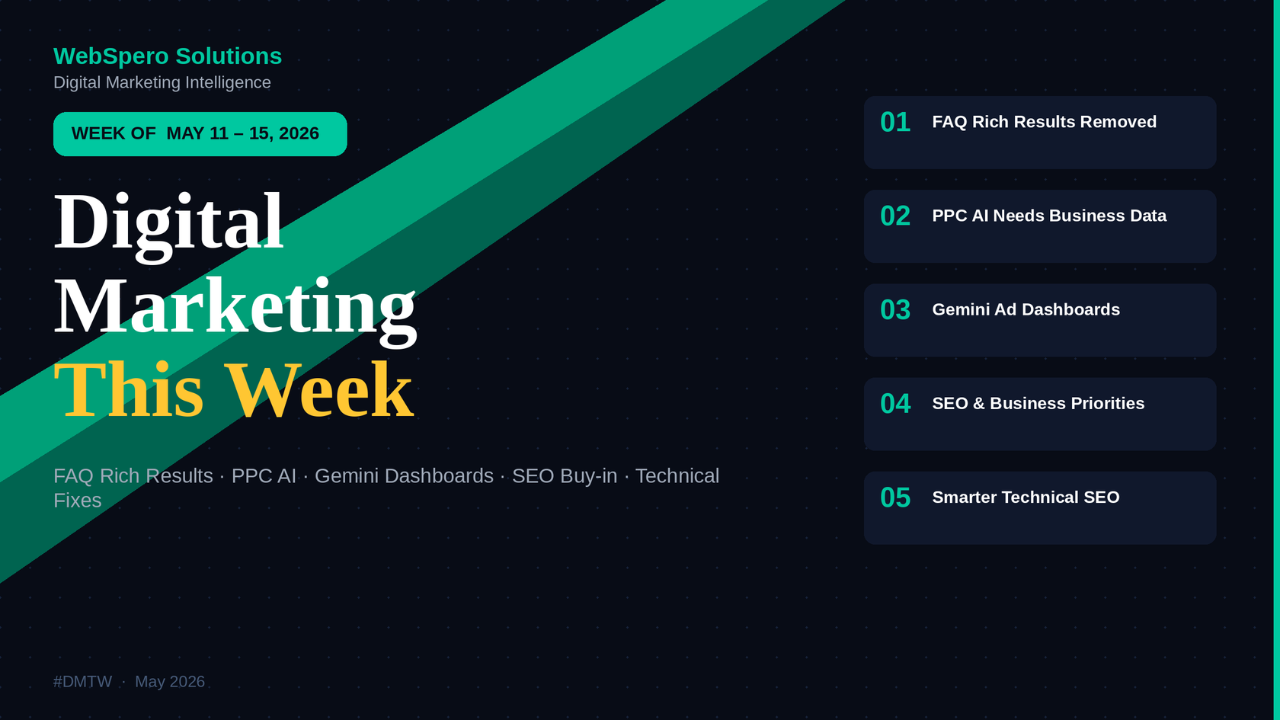
Here’s what happened this week, and what to do about it.
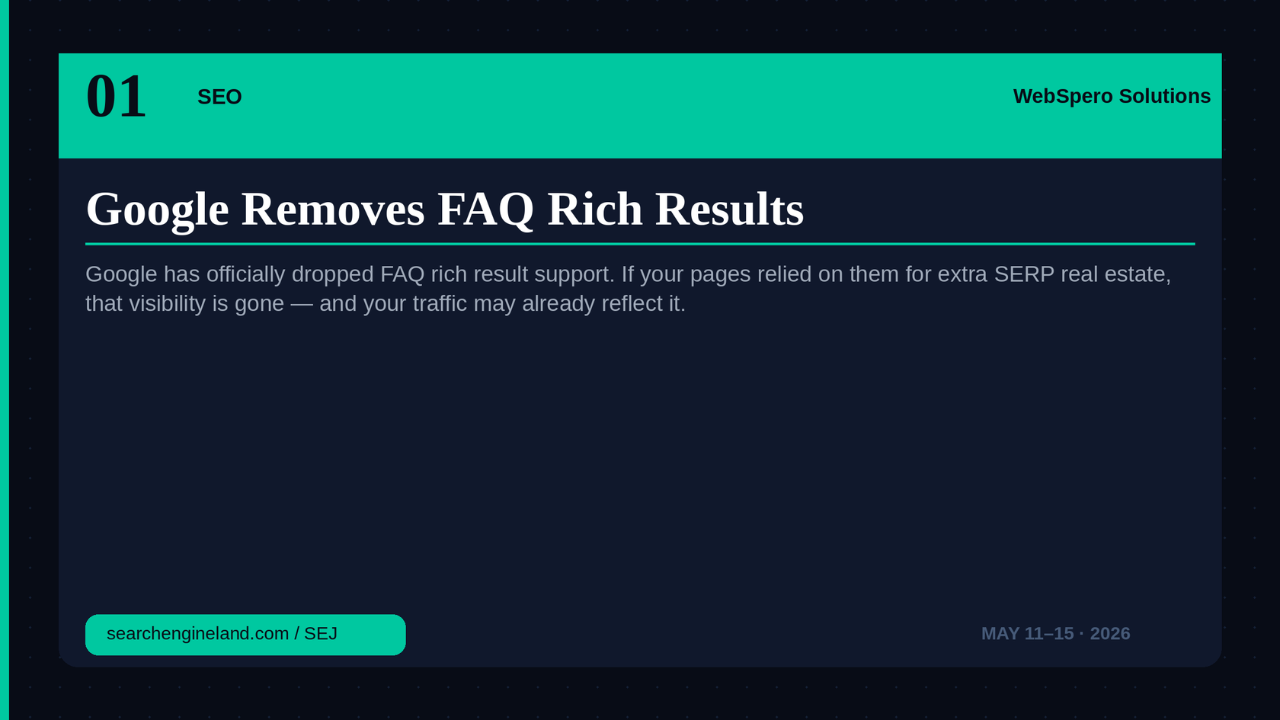
Google has officially ended support for FAQ rich results. The expanded question-and-answer blocks that used to appear directly beneath listings in the SERP are gone. Search Console will remove the associated features too, so the reporting will disappear alongside the visibility.
For sites that leaned on the FAQ schema to occupy more space on page one, this is a direct traffic event, not a hypothetical one. If your click-through rates have softened in the past week, this is the first place to check.
The broader lesson is one the industry keeps relearning: any visibility strategy built on a single Google feature is a single point of failure. Structured data is still worth implementing where it applies, but it should complement content quality, not substitute for it.
| KEY TAKEAWAY
Audit your Search Console for any FAQ performance drop from this week. Then do a harder audit: how many other features are your rankings quietly dependent on? Diversify before the next deprecation, not after. |
Source: searchengineland.com
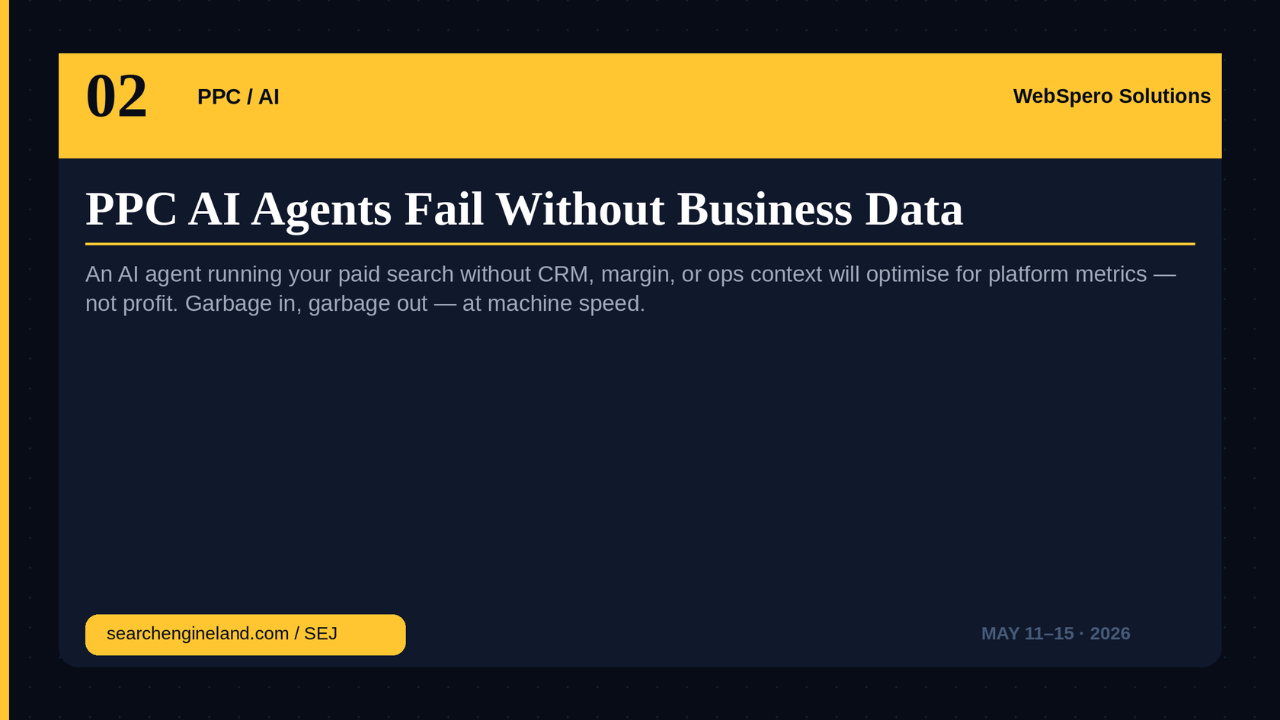
AI-powered PPC agents are now capable of managing bids, budgets, and targeting automatically. The problem: most of them are running blind. Without access to CRM data, profit margins, or operational constraints like stock levels and fulfillment capacity, these agents optimize for the metrics the ad platform shows them, not for the metrics that matter to your business.
The result is an agent that can simultaneously improve ROAS and reduce actual profitability. It will chase the conversions it can see, including low-margin leads, canceled orders, and customers your sales team can’t service.
The fix isn’t to distrust AI automation. It’s to integrate it properly. When your agent has access to real business data, its decisions improve dramatically — it stops optimizing a dashboard and starts growing a business.
| KEY TAKEAWAY
Before trusting any PPC AI agent with budget autonomy, connect it to your CRM, your margin data, and your operational limits. The intelligence is only as good as the inputs it receives. |
Source: searchengineland.com
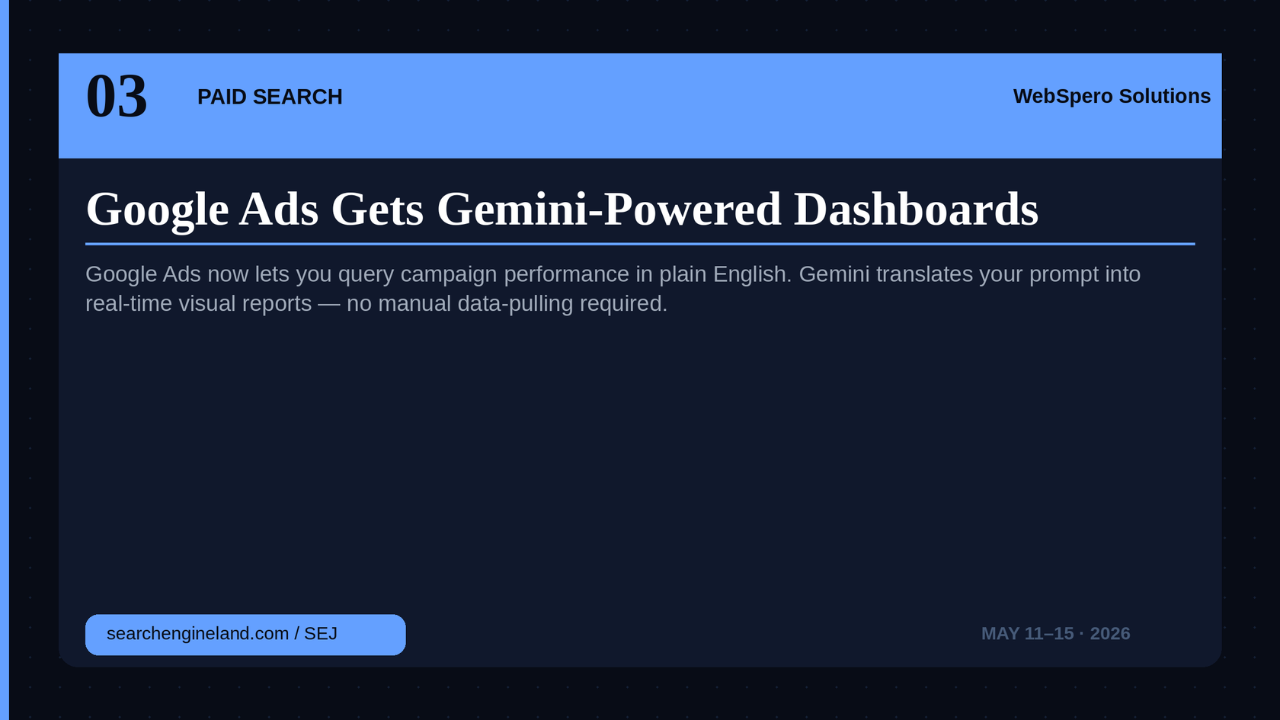
Google Ads has rolled out Gemini-powered conversational dashboards that let advertisers query their campaign data in plain English. Instead of building custom reports or navigating multiple tabs, you type a prompt, and Gemini returns a real-time visual breakdown.
For marketing teams that spend significant time pulling and formatting performance data, this is a meaningful time saver. It also lowers the barrier for non-specialists to interrogate campaign data independently, which changes how reporting flows inside organizations.
The more significant implication is directional: Google is embedding AI throughout its ad platform. Marketers who get comfortable with prompt-based workflows now will be ahead of the curve when this becomes the default.
| KEY TAKEAWAY
Test the new Gemini dashboards on your next performance review. The questions you’d usually ask a data analyst — “what drove the CPC spike last Tuesday?” — you can now ask directly. |
Source: searchengineland.com
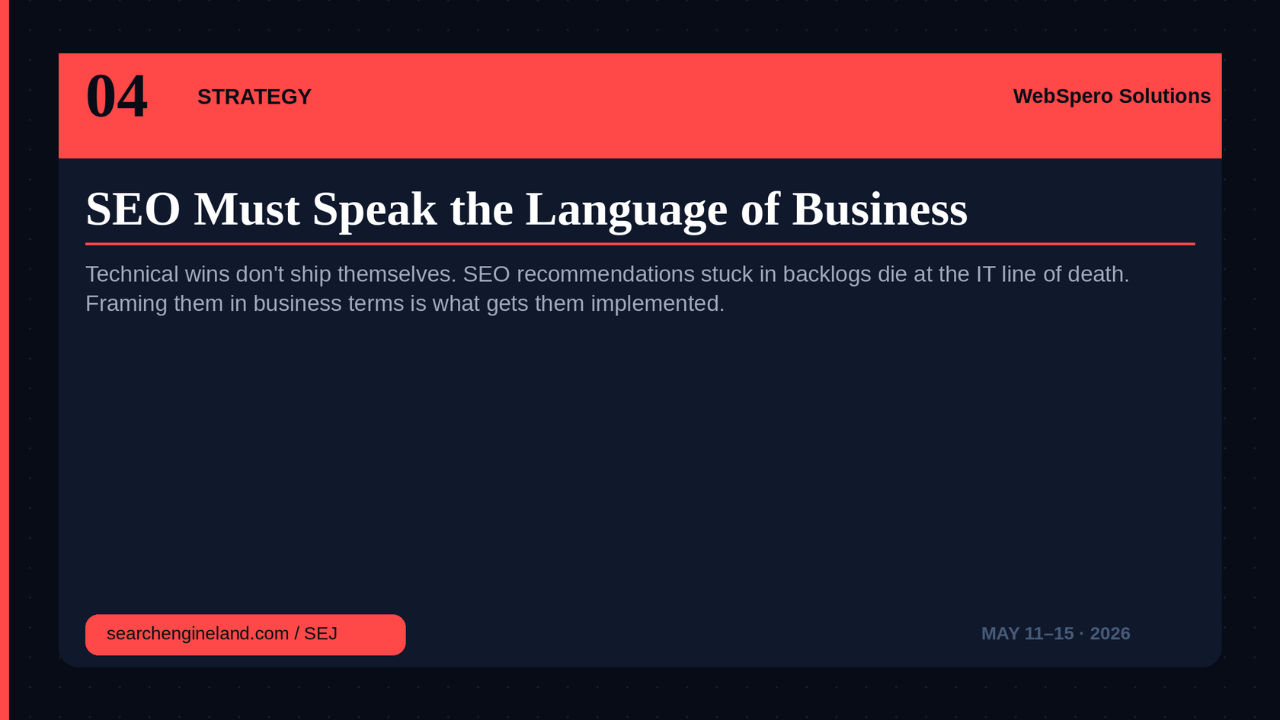
The problem isn’t technical competence. It’s framing. SEO recommendations that arrive as a list of fixes get deprioritized against product work, bug patches, and roadmap items that have a clear business case behind them. The ones that ship are the ones attached to a metric that leadership already cares about.
Reframing “fix canonical tags” as “recover the 18% of crawl budget being wasted on duplicate pages” is the same task with a different argument. One gets scheduled; the other gets parked.
“The best SEO recommendation in the world is worthless if it never gets shipped.”
Gursharan Singh, Co-founder, WebSpero Solutions
And most don’t. They sit in backlogs, waiting for dev capacity that never arrives, stuck at what Search Engine Journal calls the “IT line of death.”
| KEY TAKEAWAY
Before your next SEO brief lands with engineering or product, translate every recommendation into a business outcome. Attach it to existing priorities where possible. SEO that speaks the language of the business gets implemented. The rest doesn’t. |
Source: searchenginejournal.com
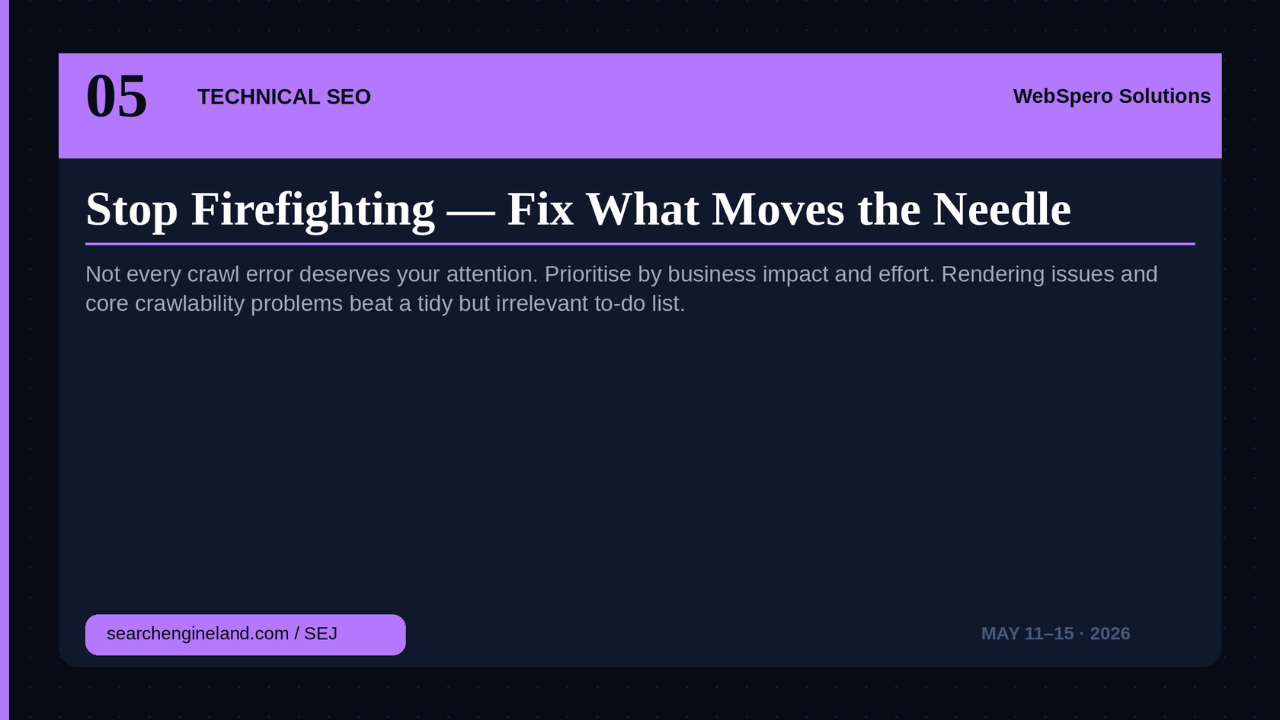
Large sites generate long crawl error lists. Most of the items on those lists are not worth fixing. The effort-to-impact ratio on a broken image alt tag is entirely different from a rendering failure that prevents Googlebot from seeing your primary content.
Search Engine Land’s framework this week makes the case for triaging technical SEO by business impact before effort. High-impact, low-effort fixes — canonical errors on high-traffic templates, JavaScript rendering issues on key landing pages should sit at the top of every sprint. Low-impact issues that would take significant dev time belong at the bottom, or off the list entirely.
The practical shift is treating technical SEO as a prioritization problem, not an exhaustion problem. The goal is not a clean audit. The goal is more organic traffic.
| KEY TAKEAWAY
Score every technical issue by potential traffic impact first, implementation effort second. A short list of high-impact fixes beats a spotless audit that took three months to work through. |
Source: searchengineland.com
We publish a weekly roundup of the most important updates in SEO, paid search, content strategy, and AI-driven marketing — every week, no noise.